Table of Contents
Toggle 📈 Investing Notice: This content is for informational purposes only and not investment advice. Investments can go up and down in value. Always do your own research and seek advice from a regulated professional. See full disclaimer.
Imagine a life where money worries no longer hold you back, where you have the freedom to spend time with loved ones, pursue your passions, travel, or retire comfortably on your terms.
For many, this dream feels distant, especially in today’s unpredictable economy. But with the right knowledge and smart investment strategies, financial independence can become your reality.
I’m one of four children raised by a single mother who worked tirelessly to provide for us.
Like many families in similar situations, financial education wasn’t easily accessible, and the path to building wealth wasn’t clear.
I was blessed with a husband who manages money well, despite my early shortcomings when we got married.
When I moved to the UK, friends advised me to get store cards and credit options. Still, thanks to my husband’s frugality and impressive ability to manage money mentally, we avoided unnecessary debt and started focusing on true wealth building.
My journey into investing began with resources like the Meaningful Money podcast (https://meaningfulmoney.tv/mmpodcast/) and various other trainings and extensive research.
These helped me understand the power of investing in low-cost, diversified funds that grow steadily over time through compounding.
Vanguard’s ETFs and index funds became the cornerstone of my investment strategy.
This shift didn’t just help grow my savings; it transformed my entire approach to money and paved the way toward financial independence.
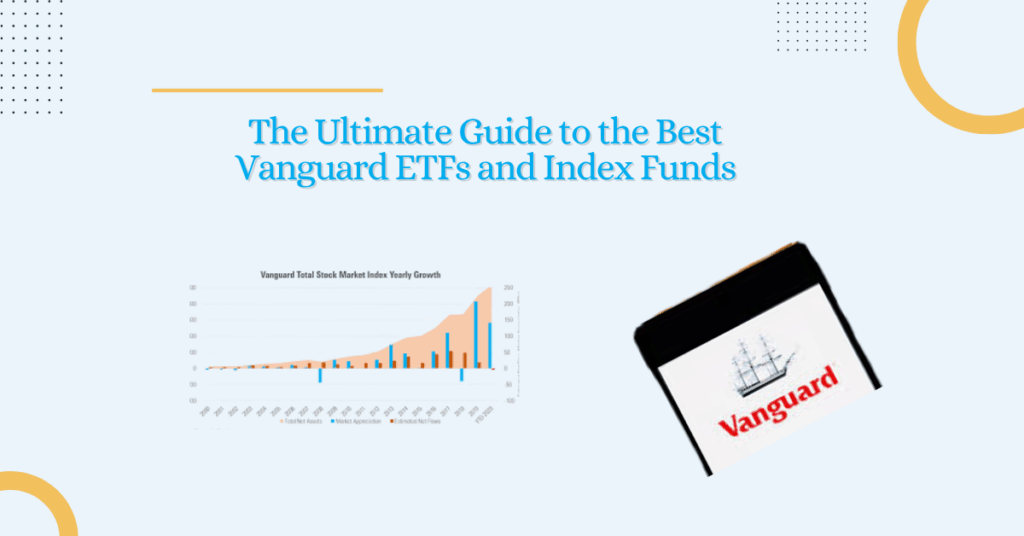
This comprehensive Vanguard ETFs UK beginners’ guide helps you build wealth with the best index funds.
You’ll gain a clear understanding of what these funds are, why Vanguard stands out, how fees affect your returns, and practical advice for building a portfolio tailored to your goals.
Whether you’re just starting or looking to optimise your investments, this guide will help you take confident steps toward financial freedom.
Let’s embark on this journey together!
Understanding Vanguard ETFs UK: Beginners Need to Know
Investing can seem complicated at first, but understanding a few key concepts can make it much easier to navigate.
Here’s a beginner-friendly explanation of the most important terms you’ll encounter when investing in Vanguard ETFs and index funds.
What Are ETFs and Index Funds?
An ETF is like a basket of many stocks, bonds, or other assets all bundled into one fund that you can buy and sell on the stock market, just like an individual share.
This means with one purchase, you gain exposure to a wide variety of companies or bonds, which helps spread your risk.
ETFs typically track a market index (like the FTSE All-World) and are traded throughout the day at market prices.
What is an Index Fund?
An index fund is a type of investment fund, either a mutual fund or an ETF, that aims to replicate the performance of a specific market index.
Instead of trying to beat the market, index funds follow the market’s overall performance by holding the same assets as the index.
This “passive management” usually results in lower fees and consistent long-term returns.
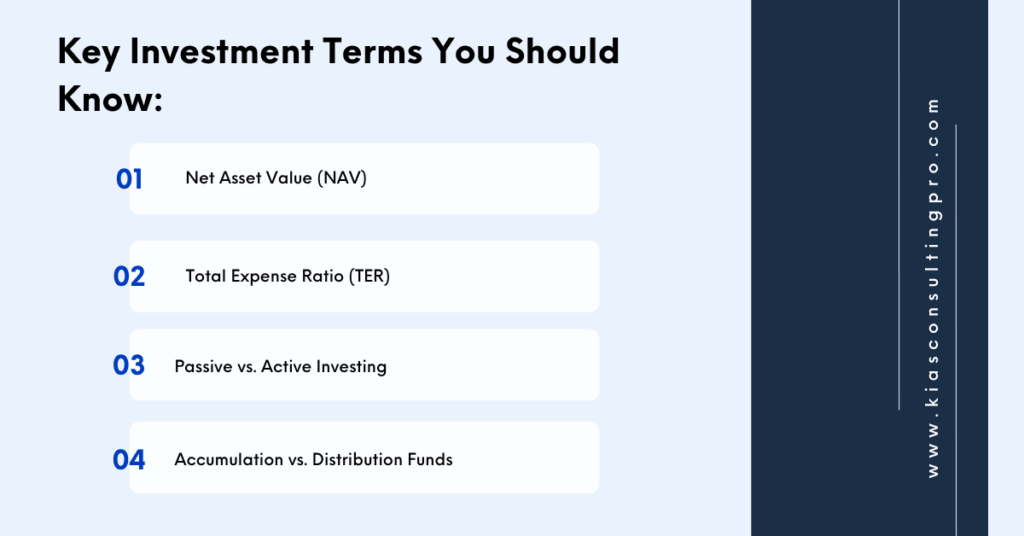
Key Investment Terms You Should Know:
- Net Asset Value (NAV): This is the per-share value of a fund’s assets minus its liabilities. For mutual funds, NAV is calculated once per day; ETFs trade at market prices, which may be above or below NAV during trading hours.
- Total Expense Ratio (TER): This is the annual fee charged by the fund provider to manage the fund. Lower TER means you keep more of your returns, making Vanguard’s low fees a vast advantage.
- Accumulation vs. Distribution Funds: Accumulation funds automatically reinvest dividends to grow your investment, while distribution funds pay dividends out to you as income. For long-term growth, accumulation funds are usually preferred.
- Passive vs. Active Investing: Passive investing means tracking an index with minimal buying and selling, usually at a lower cost. Active investing involves fund managers choosing investments to beat the market, but often comes with higher fees and more risk. For more on passive investing and portfolio building, see Building and Managing a Stock Portfolio in the UK.
Why Does This Matter?
Understanding these basics helps you make more intelligent choices.
Investing in ETFs and index funds through Vanguard lets you access diversified, low-cost portfolios that grow steadily over time, without needing to be a financial expert or spend hours managing your investments.
If you’re new to investing, don’t worry. The simplicity and transparency of ETFs and index funds make them ideal for beginners aiming to build lasting wealth.
Book a 1:1 session for personalised guidance.
Why Vanguard Funds Are Ideal for UK Beginners
Choosing the right investment provider is just as important as picking the right funds.
Vanguard stands out as a top choice for UK beginners for several key reasons:
1. Low Costs:
Vanguard pioneered the low-cost investing movement.
Their funds consistently have some of the lowest Total Expense Ratios (TERs) in the industry.
Lower fees mean more of your money stays invested and compounds over time, which can make a massive difference in your long-term wealth.
2. Transparency and Trust:
Vanguard operates under a unique client-owned model, meaning the company is owned by the investors in its funds, not external shareholders.
This structure aligns Vanguard’s interests with yours, fostering transparency and prioritising investor outcomes over profits.
3. Simple and Diversified Investment Options:
Vanguard offers a broad range of ETFs and index funds that track major global indices, allowing you to build diversified portfolios easily without the need to pick individual stocks or bonds.
4. Accessibility:
Whether you’re investing small or large sums, Vanguard funds are accessible through many popular UK platforms like InvestEngine, AJ Bell Youinvest, and Interactive Investor.
This flexibility allows you to invest in a way that suits your budget and preferences.
For beginners looking to start or optimise their investment journey, Vanguard provides the perfect blend of affordability, simplicity, and reliability, making it an excellent foundation for building financial independence.
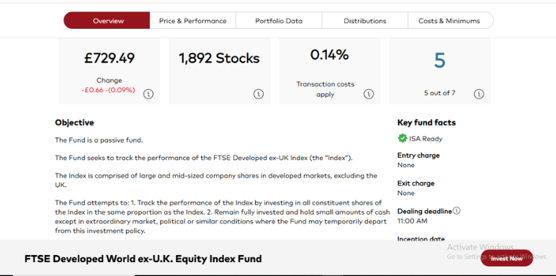
1. Vanguard FTSE Developed World ex-UK Equity Index Fund (Accumulation)
Overview:
This index fund provides broad exposure to large and mid-sized companies in developed markets worldwide, excluding the UK.
It’s designed for investors who want to diversify internationally beyond their local market, which is beneficial if you already have significant exposure to the UK (through property or local investments).
Performance:
Historically, this fund has delivered solid returns, with an approximate 8% annual return over the last year and about 79% cumulative growth over five years.
Keep in mind that past performance doesn’t guarantee future results, but this fund has shown steady growth and resilience over time.
Fund Allocation:
- Geographic: Around 70% invested in North America (primarily the USA), 15% in Europe (excluding the UK), with the remainder spread across developed markets like Japan and Australia.
- Sector: Technology (approx. 22%), financials, consumer discretionary, healthcare, and industrials dominate the portfolio, offering balanced exposure to diverse industries.
Fees:
The fund has a low Total Expense Ratio (TER) of 0.14% annually, meaning very low costs eat into your returns.
This low fee helps maximise your compound growth over the long term.
Minimum Investment:
You can start investing with as little as a £500 lump sum or £100 monthly via direct debit.
Recommended Platforms:
This fund is available on Vanguard’s platform, AJ Bell Youinvest, and Interactive Investor, which offer competitive fees and easy access.
Why Consider This Fund?
It’s an excellent building block for a global, UK-excluded equity portfolio.
Especially valuable if you want to reduce your UK concentration and gain diversified exposure to strong, developed economies.
2. Vanguard FTSE All-World UCITS ETF (VWRP/VWRL)
Overview:
This ETF offers truly global equity exposure by tracking the FTSE All-World Index, which includes large and mid-sized companies across both developed and emerging markets.
It covers approximately 95% of the investable global equity universe, making it one of the most comprehensive ETFs available to UK investors.
Performance:
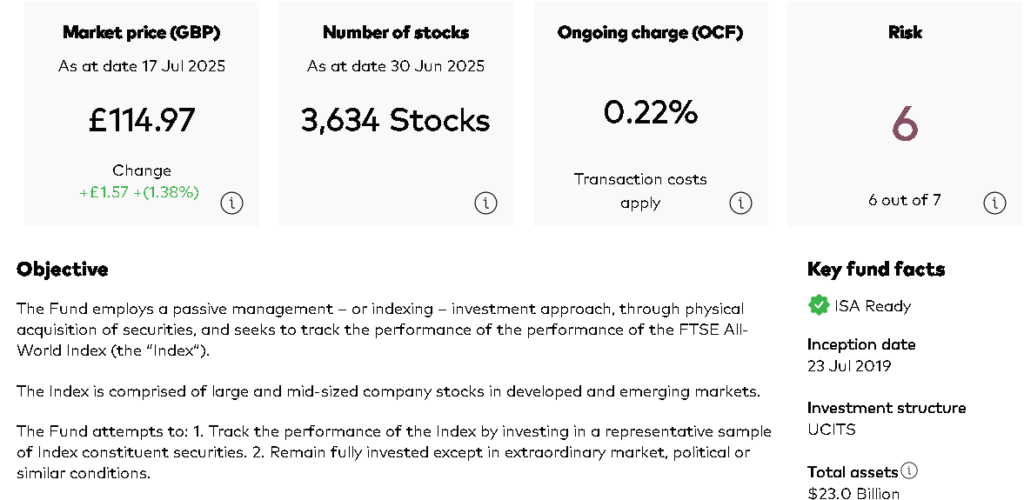
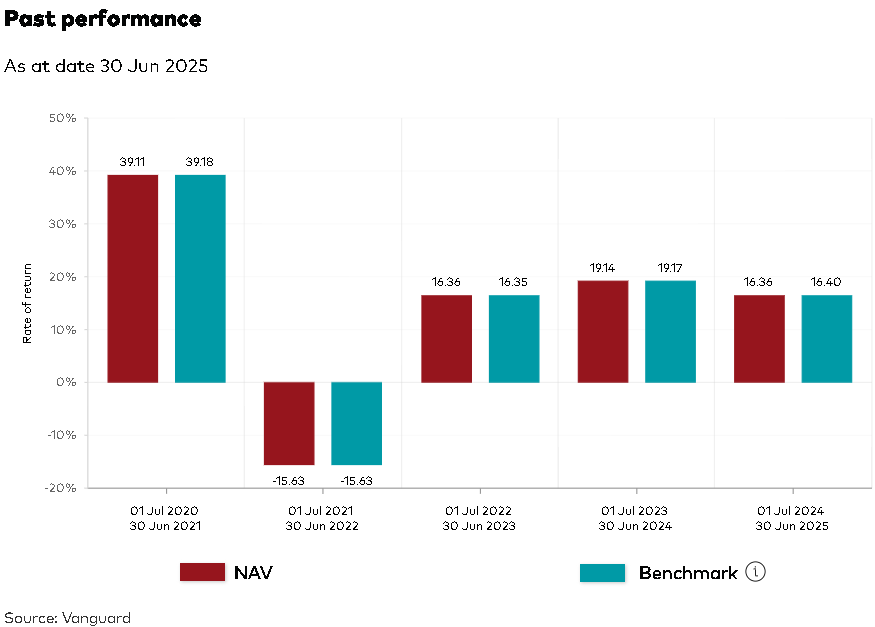
The fund has delivered impressive growth, with a recent annualised return of around 12% and a cumulative 5-year return close to 75%.
It includes exposure to a broad range of economies, allowing you to tap into the growth potential of developed markets like the USA and emerging markets such as China, India, and Brazil.
Fund Allocation:
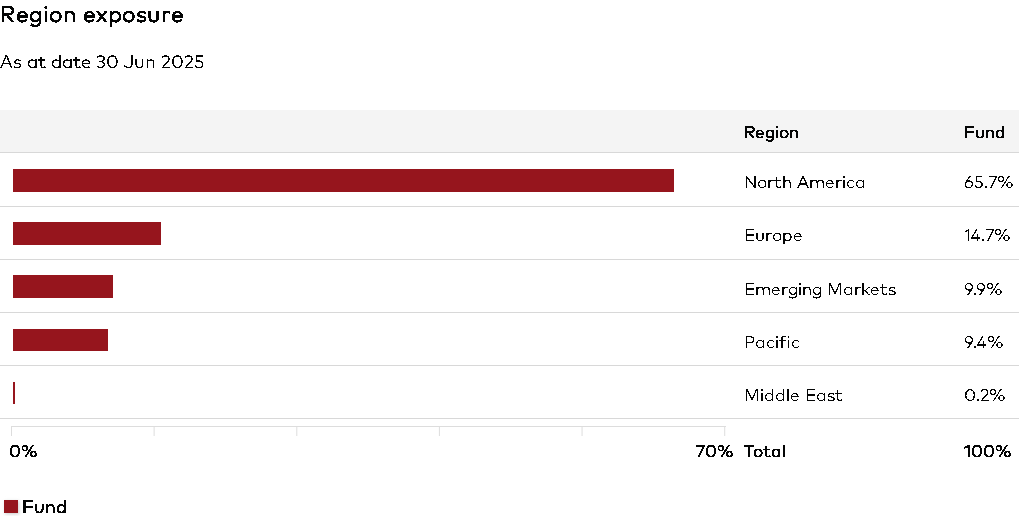
- Geographic: About 60% of the portfolio is invested in North America, with approximately 4% exposure to the UK and 17% to Europe. The rest is distributed across Asia-Pacific and emerging markets.
- Sector: Technology holds the largest sector weight (~22%), followed by consumer discretionary, healthcare, and financials, reflecting the global economy’s diversity.
Fees:
The ETF has a Total Expense Ratio (TER) of 0.22%, which is very competitive for such broad coverage and helps preserve your returns over time.
Minimum Investment:
You can start investing with approximately £500 as a lump sum or around £100 monthly, depending on the platform you use.
Recommended Platforms:
- InvestEngine offers this ETF with zero platform fees, ideal for small investors aiming to minimise costs.
- AJ Bell Youinvest also provides access with a modest platform fee, capped annually, making it suitable for different portfolio sizes.
Why Consider This ETF?
VWRP/VWRL is ideal if you want simple, all-in-one global equity exposure without needing to build a portfolio of multiple funds.
Its inclusion of emerging markets adds growth potential, though it can increase volatility, so it’s best suited for investors with a longer time horizon and moderate risk tolerance.
3. Vanguard FTSE Global All Cap Index Fund (Accumulation)
Overview:
This fund expands global exposure by including companies of all sizes, large, mid, and small caps, across both developed and emerging markets.
Tracking the FTSE Global All Cap Index, it offers one of the most comprehensive portfolios, capturing a wide variety of growth opportunities worldwide.
Performance:
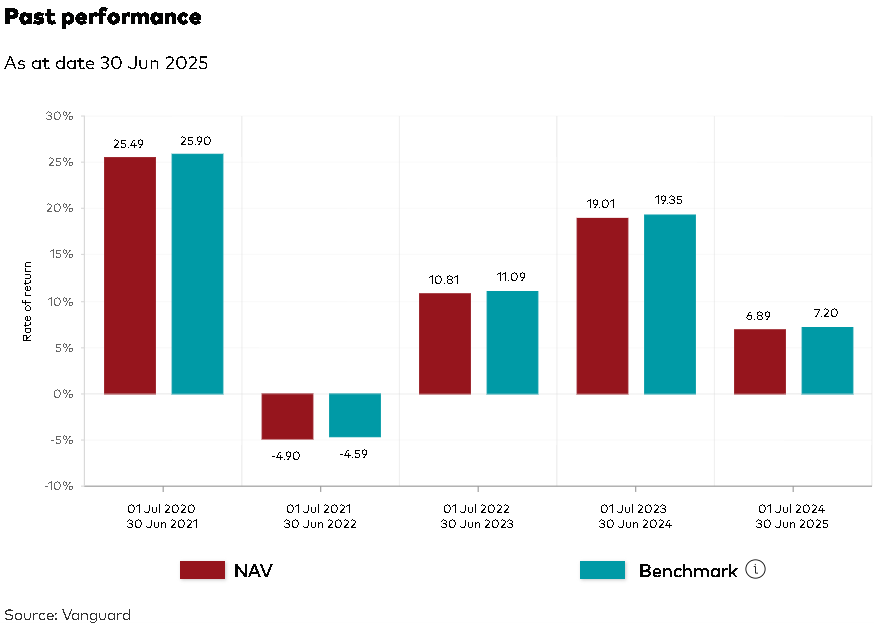
The fund has experienced solid performance, with annual returns of approximately 7.9% in recent years and a cumulative growth of about 70% over the last five years.
While newer than some other funds, its diversification provides stability and growth potential over time.
Fund Allocation:
- Geographic: Approximately 60% invested in North America, with around 16% in Europe (including 4% UK), and about 10% in emerging markets like China, Taiwan, and Brazil.
- Sector: Technology again leads at roughly 21%, followed by consumer discretionary, healthcare, and industrials, reflecting a broad sector balance.
Fees:
The Total Expense Ratio (TER) is about 0.23%, marginally higher than some other Vanguard funds but still low compared to industry averages, making it cost-effective for the broad exposure it provides.
Minimum Investment:
You can start investing with a minimum lump sum of £500 or monthly contributions of around £100, depending on your chosen platform.
Recommended Platforms:
This fund is accessible on platforms like AJ Bell Youinvest and Interactive Investor, which offer competitive fees and user-friendly interfaces.
Why Consider This Fund?
The inclusion of small-cap stocks gives this fund additional growth potential compared to funds focusing only on large- and mid-caps.
It’s a great option if you want a diversified, global portfolio with exposure to emerging market growth and are comfortable with moderate volatility.
4. Vanguard Lifestrategy 100% Equity Fund
Overview:
The Lifestrategy 100% Equity Fund offers a fully diversified portfolio invested entirely in global equities.
It’s a ready-made fund designed for investors who want a simple, all-in-one solution with broad market exposure across different countries and sectors.
Performance:
This fund has shown consistent growth aligned with global equity markets, making it a solid choice for long-term investors.
The fund benefits from diversification across developed and emerging markets, with a focus on growth.
Fund Allocation:
- Geographic: Exposure is spread globally, including significant investments in the USA, Europe, UK, and emerging markets.
- Sector: The fund includes a mix of sectors such as technology, healthcare, financials, and consumer discretionary, providing balanced exposure.
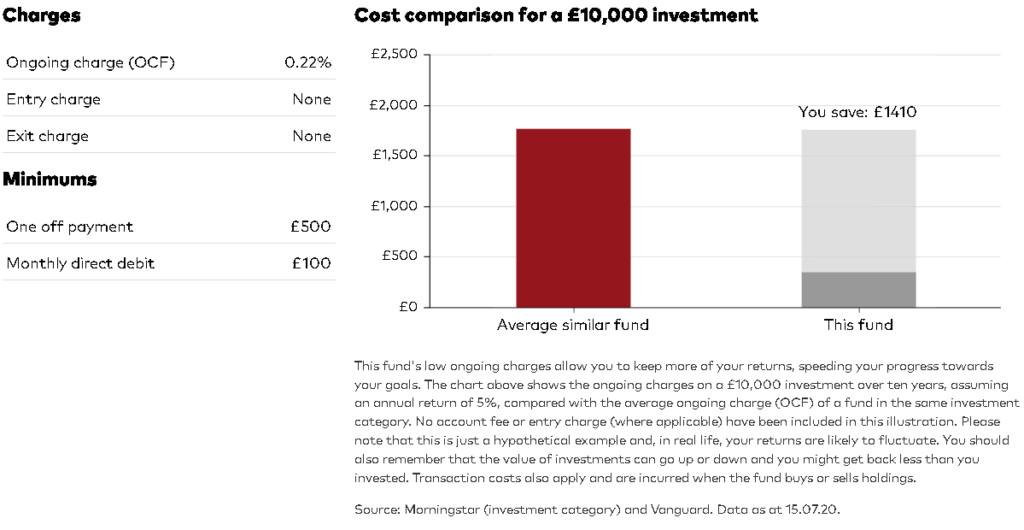
Fees:
With a Total Expense Ratio (TER) of around 0.22%, the fund is cost-effective for a diversified equity portfolio, though slightly higher than some pure ETFs due to its actively managed components.
Minimum Investment:
Minimum investment typically starts at £500, with options for monthly contributions as low as £100.
Recommended Platforms:
Available on popular UK platforms such as AJ Bell Youinvest, Interactive Investor, and Hargreaves Lansdown.
Note that Hargreaves Lansdown may have higher platform fees for smaller portfolios.
Why Consider This Fund?
It’s ideal if you prefer a hands-off, “set and forget” approach, as it manages global equity allocation for you.
This fund works well for investors seeking maximum growth and who are comfortable with full equity risk.
Platform Fees and Costs That Vanguard ETFs UK Beginners Must Understand
When investing in Vanguard ETFs and index funds, choosing the right platform is just as crucial as choosing the funds themselves.
Platform fees can significantly impact your overall investment returns, especially if you’re starting with a smaller portfolio.
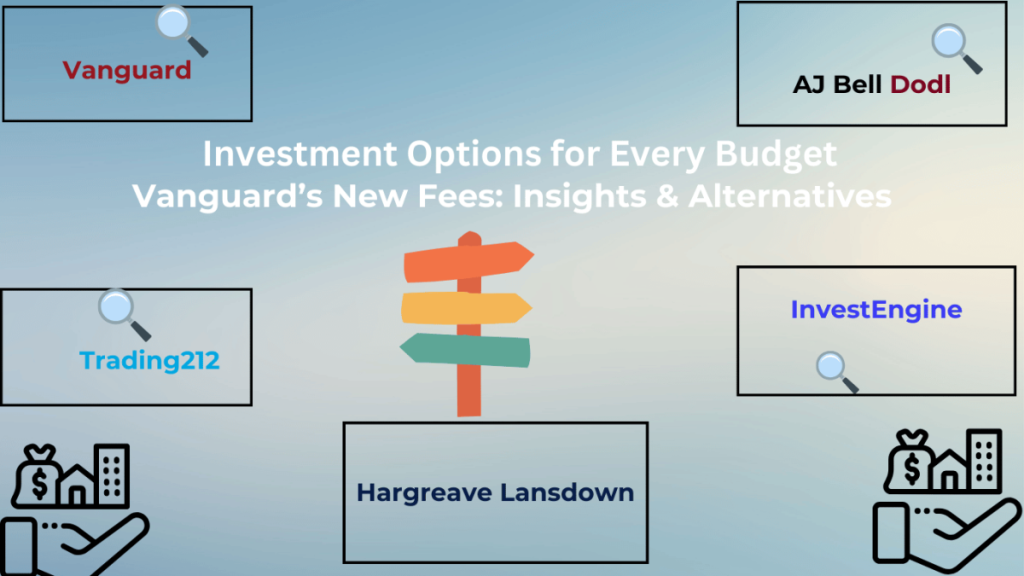
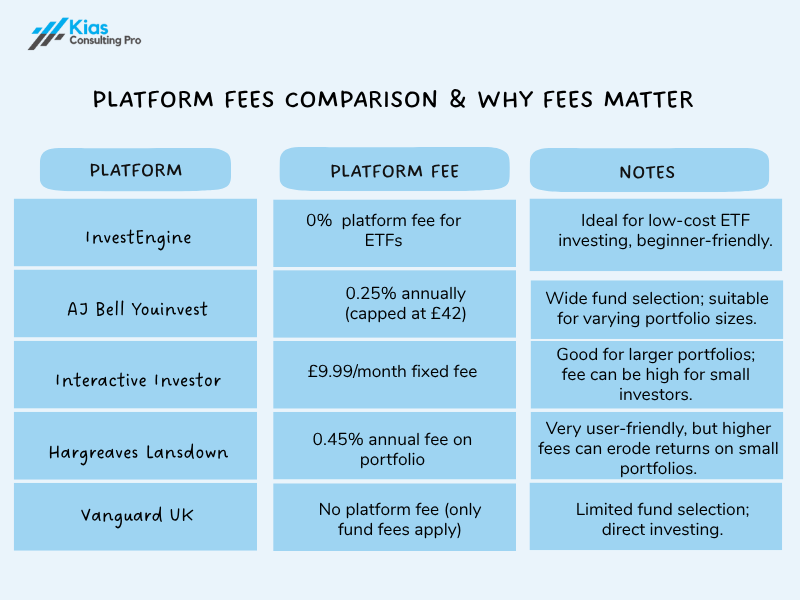
Here’s a comparison of popular UK platforms where you can access Vanguard funds, highlighting their fee structures:
Platform | Platform Fee | Notes |
0% platform fee for ETFs | Ideal for low-cost ETF investing, beginner-friendly. | |
0.25% annually (capped at £42) | Wide fund selection; suitable for varying portfolio sizes. | |
£9.99/month fixed fee | Suitable for larger portfolios; the fee can be high for small investors. | |
0.45% annual fee on portfolio | Very user-friendly, no dealing fees on funds; trading fees apply only for ETF/share stockbroking trades. | |
No platform fee (only fund fees apply) | Limited fund selection; direct investing. |
🔗 Affiliate Disclosure: This post contains affiliate links. This means we may earn a small commission at no extra cost to you. Read our full Affiliate Disclosure for more information.
Why Do Fees Matter?
Even small annual fees can drastically reduce your investment growth over time.
For example, a 1% higher fee can cut your returns by tens of thousands of pounds over a 20-30 year investment horizon.
To understand this effect better, see the U.S. Securities and Exchange Commission’s guide on Fees and Expenses.
By selecting a platform with lower fees, especially if your portfolio is under £32,000, you maximise your returns and accelerate your path to financial independence. For smaller investors, InvestEngine’s zero platform fees for ETFs make it particularly attractive.
Practical Portfolio Examples for UK Beginners
Creating a diversified portfolio tailored to your investment amount and goals is key to building wealth steadily over time.
Here are two example portfolios to give you a clear idea of how you can allocate your investments using Vanguard ETFs and index funds on cost-effective platforms.
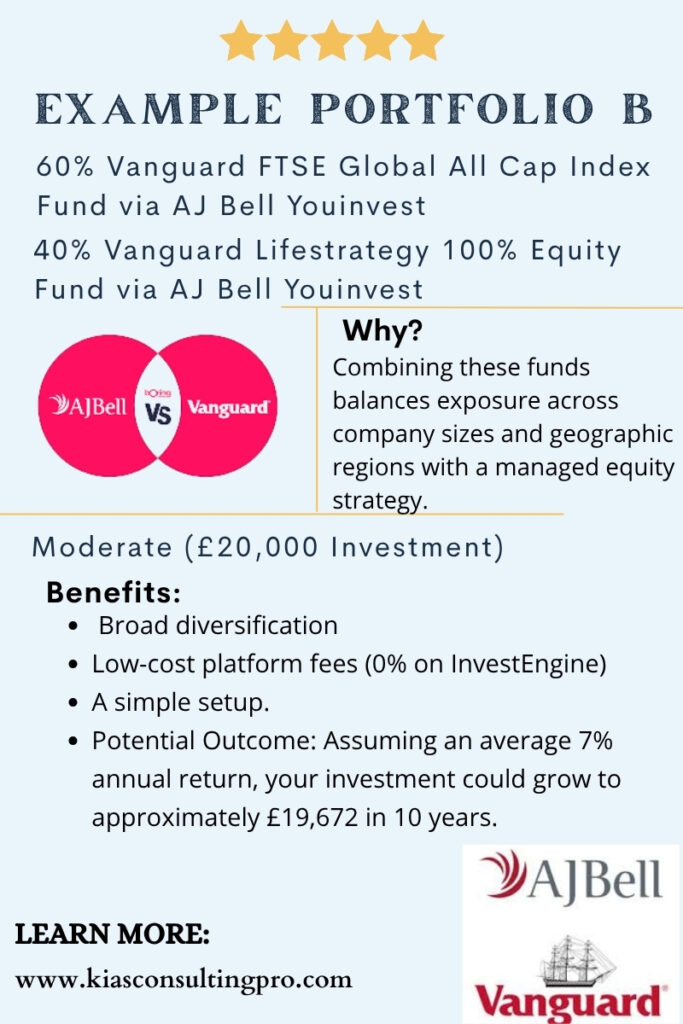
Example Portfolio A: Starting Small (£10,000 Investment)
- 100% Vanguard FTSE All-World UCITS ETF (VWRP) via InvestEngine
- Why? This single ETF gives you exposure to thousands of companies worldwide, including emerging markets.
- Benefits: Broad diversification, low-cost platform fees (0% on InvestEngine), and a simple setup.
- Potential Outcome: Assuming an average 7% annual return, your investment could grow to approximately £19,672 in 10 years.
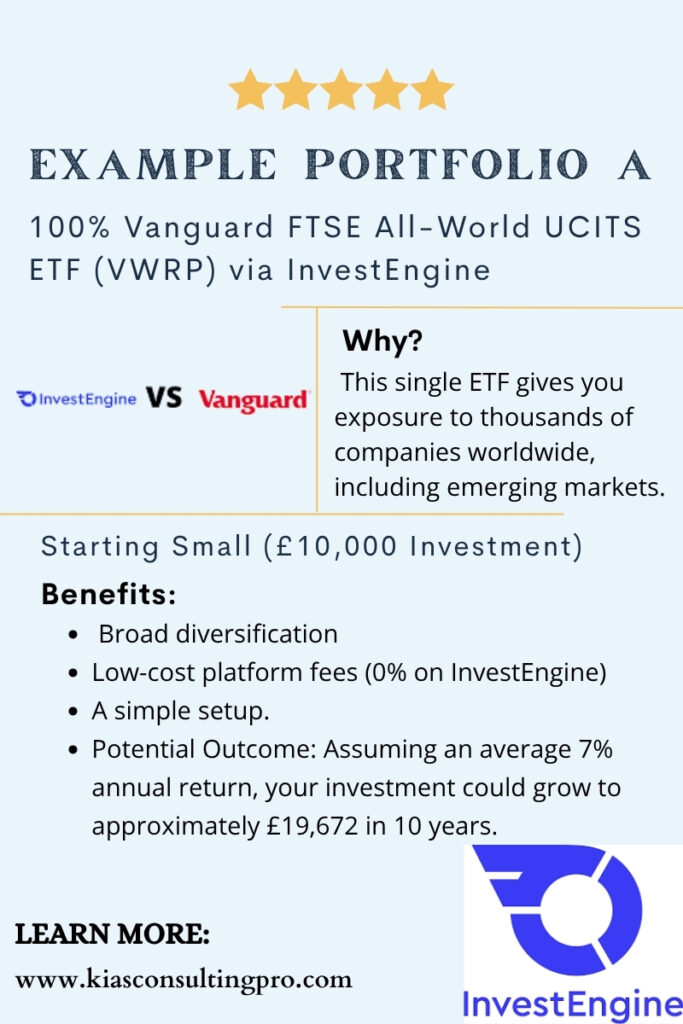
Example Portfolio B: Moderate (£20,000 Investment)
- 60% Vanguard FTSE Global All Cap Index Fund via AJ Bell Youinvest
- 40% Vanguard Lifestrategy 100% Equity Fund via AJ Bell Youinvest
- Why? Combining these funds balances exposure across company sizes and geographic regions with a managed equity strategy.
- Benefits: Diversifies across global equities while maintaining a hands-off, managed approach.
- Considerations: Platform fees at AJ Bell (0.25% capped annually) are reasonable for this portfolio size.
- Potential Outcome: With a conservative estimate of 6.5% annual return, your £20,000 could grow to around £38,747 in 10 years.
📈 Investing Notice: This content is for informational purposes only and not investment advice. Investments can go up and down in value. Always do your own research and seek advice from a regulated professional. See full disclaimer.
Key Takeaway:
You can start with what you can afford and invest consistently.
Over time, your portfolio will compound and grow, bringing you closer to financial independence.
Platforms like InvestEngine and AJ Bell Youinvest make it easy to start small while keeping costs low, crucial for maximising your returns.
Common Investing Mistakes Beginners Should Avoid
Starting your investment journey can be exciting but also daunting.
Avoiding these common pitfalls will help you stay on track and grow your wealth more effectively:
1. Ignoring the Impact of Fees
High platform and fund fees quietly erode your returns over time.
Always compare fees before investing. For smaller portfolios, low-cost platforms like *InvestEngine or AJ Bell Youinvest help you keep more of your money working for you.
2. Lack of Diversification
Putting all your money into a single stock or sector is risky.
Diversifying across regions, industries, and asset types reduces risk and smooths out returns, especially during market volatility.
3. Trying to Time the Market
Many beginners fall into the trap of buying high and selling low, driven by short-term market fears or hype.
Instead, focus on consistent investing, regardless of market ups and downs. Dollar-cost averaging can help manage volatility.
4. Neglecting Regular Portfolio Reviews
Markets change, and so do your circumstances. Reviewing and rebalancing your portfolio annually ensures it stays aligned with your goals and risk tolerance.
5. Overlooking Tax-Efficient Wrappers
Failing to use ISAs or pensions can lead to paying unnecessary taxes on your gains. Maximise your tax benefits by investing through appropriate wrappers.
6. Emotional Investing
Avoid making investment decisions based on emotions like fear or greed. Staying disciplined and patient is key to long-term success.
Solutions at a Glance
- Use low-cost platforms and funds.
- Build a diversified portfolio with Vanguard ETFs/index funds.
- Invest regularly using pound-cost averaging.
- Review and rebalance your portfolio annually
- Utilise tax-efficient accounts (ISAs, SIPPs).
- Maintain a long-term mindset and avoid impulsive decisions.
Frequently Asked Questions (FAQs)
Q1: What’s the difference between ETFs and index funds?
ETFs (Exchange-Traded Funds) are traded on stock exchanges throughout the day like individual stocks, while index funds (usually mutual funds) are priced once per day. Both track market indexes and offer low-cost, diversified investing, but ETFs offer more trading flexibility.
Q2: Can I lose money investing in Vanguard ETFs or index funds?
Yes, investing involves risks, and fund values can fluctuate with market conditions. However, diversified index funds and ETFs generally carry lower risk than individual stocks and are designed for long-term growth.
Q3: What is the minimum investment amount?
Most Vanguard funds require a minimum initial investment of about £500 or monthly contributions starting around £100, depending on the platform.
Q4: How do fees affect my returns?
Even small fees reduce your investment growth over time. Vanguard’s low expense ratios help maximize returns, and choosing low-fee platforms is equally important.
For detailed information on fees and expenses, see the SEC guide on fees and expenses.
Q5: Are Vanguard funds suitable for beginners?
Absolutely. Their passive management, diversification, and low fees make them ideal for investors new to the market.
Conclusion: Taking Your Next Steps Toward Financial Independence
Investing in Vanguard ETFs and index funds offers a simple, low-cost, and effective way to build lasting wealth, especially for UK beginners aiming for financial independence. By understanding the basics, choosing diversified funds, and selecting the right platform with minimal fees, you set yourself up for success.
Remember, the key to long-term growth is consistency and patience. Starting with even a modest amount and regularly investing can harness the power of compounding over time. Avoid trying to time the market and stay focused on your goals.
To accelerate your journey, consider:
- Creating a diversified portfolio tailored to your risk tolerance.
- Using tax-efficient accounts like ISAs and SIPPs.
- Minimising fees by choosing the best platforms for your investment size.
- Reviewing and rebalancing your portfolio annually.

Ready to start your investment journey with confidence?
Book a free one-on-one coaching session with me where we’ll discuss your goals, answer your questions, and create a personalised plan to help you begin investing in ETFs and index funds the right way.
No obligations, just clear guidance tailored for you.