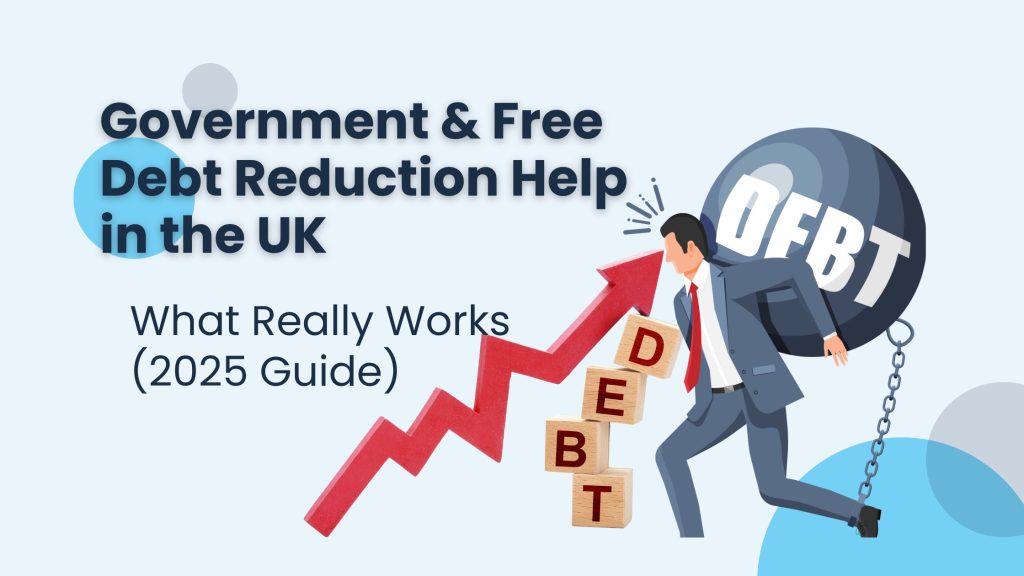

Illustration of a man carrying a heavy debt ball with a red arrow rising, symbolising debt relief. Banner for the blog “Government & Free Debt Reduction Help in the UK: What Really Works (2025 Guide).”

Government & Free Debt Reduction Help in the UK: What Really Works (2025 Guide)

Introduction


📈 Investing Notice: This content is for informational purposes only and not investment advice. Investments can go up and down in value. Always do your own research and seek advice from a regulated professional. See full disclaimer.

Debt can feel overwhelming, but there is government debt reduction help in the UK designed to give you relief. From free schemes like Breathing Space and Debt Relief Orders to trusted charities such as StepChange and Citizens Advice, support is available. This guide shows you what really works in 2025, and how to take the first steps toward financial freedom.


Whether you’re dealing with credit cards, personal loans, or business debts, there are proven options available. And yes, some of these choices might impact things like your ability to get a mortgage or borrow for a business in the future. But here’s the key: your financial health today matters more than a “what if” years down the line. You can always rebuild credit and cross those bridges when you get there.


This guide breaks down the free and government debt reduction help available in the UK in 2025, and shows you how to choose the right option.

1. Free Debt Advice Charities

💡 Impact on your future: Speaking to these organisations will not affect your credit score or your ability to get a mortgage or run a business. They are purely advice and support channels.

2. Government Debt Reduction Help in the UK: Key Schemes Explained

The UK government provides several schemes designed to give you breathing room or to write off unmanageable debt.

Breathing Space (Debt Respite Scheme)

Debt Relief Order (DRO)

Individual Voluntary Arrangement (IVA)

Individual Voluntary Arrangement (IVA)

Bankruptcy (Last Resort)

💡 Impact on your future: These schemes will affect your credit score and future borrowing, but remember, lenders already see unpaid debts. Taking formal action shows responsibility, and you can always rebuild credit later. For most people, relief today is worth more than the “maybe” of a mortgage years from now.

3. Debt Management Plans (DMPs)

A DMP is an agreement to repay debts at an affordable monthly rate.

💡 Impact on your future: DMPs will show on your credit file, but they’re less severe than bankruptcy or IVAs. Many lenders will still consider you in the future once debts are cleared.

4. Debt Consolidation & Balance Transfers

While not government schemes, these options can make repayment easier:

⚠️ Important: These only work if you avoid taking on new debts and stick to repayment.

💡 Impact on your future: Consolidation can actually improve your credit if managed well, but missed payments can make things worse.

👉 For step-by-step strategies, check my full guide: 10 Smart Debt Repayment Strategies.

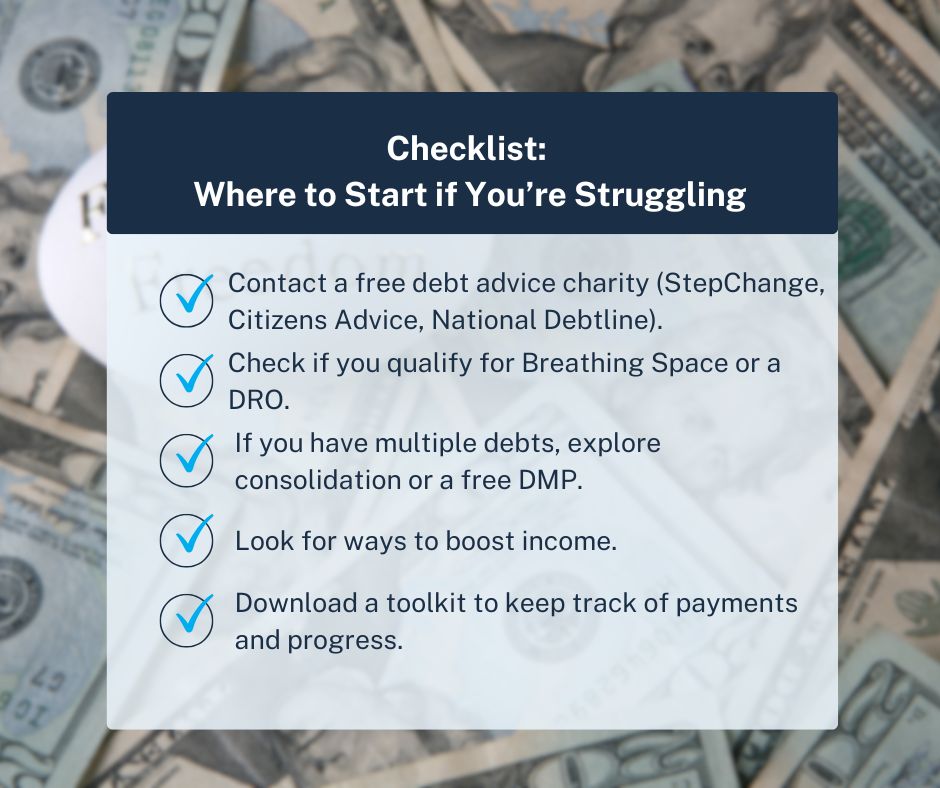
Checklist image showing five key steps for people struggling with debt in the UK, including contacting debt advice charities, checking for Breathing Space or DRO, exploring consolidation, boosting income, and downloading a toolkit.

5. Boosting Income to Tackle Debt Faster

Boosting income works best when combined with government debt reduction help in the UK, such as a DMP or DRO, to create a clear plan.

Sometimes cutting expenses isn’t enough. Increasing income accelerates debt reduction. Options include:


💡 Impact on your future: Unlike formal schemes, boosting your income has no negative effect on credit or borrowing. In fact, showing higher, stable income improves your future financial standing.

👉 Explore practical ways to do this in: How to Leverage Assets to Boost Income and Pay Off Debt Faster.

6. Emotional & Practical Support

Debt isn’t just about numbers; it affects your mental health, relationships, and even your confidence to pursue opportunities.

Yes, there are excellent free counselling services available through charities and the NHS. But beyond that, sometimes what you need most is a safe space to talk through your situation and get a plan that feels realistic.

 I truly believe in helping people get out of debt faster,  and that’s why my consultation service is completely free, with no strings attached. Charging a fee at this stage wouldn’t feel right, because it would only add to the burden you’re already carrying. My goal is to help as many people as possible achieve financial independence, and this is one important way to start.

If you’d like to take that first step, you can book your free consultation today. We’ll look at where you are, where you want to be, and create a debt reset path that works for you.

7. Checklist: Where to Start if You’re Struggling

  1. Contact a free debt advice charity (StepChange, Citizens Advice, National Debtline).

  2. Check if you qualify for Breathing Space or a DRO.

  3. If you have multiple debts, explore consolidation or a free DMP.

  4. Look for ways to boost income.

Download this toolkit to keep track of payments and progress.

Graphic with the word “Conclusion” on textured paper background.

Debt can feel like the end of the road, but in reality, it’s a turning point. Yes, some choices may affect your ability to get a mortgage, start a business, or borrow again in the short term. But protecting your financial wellbeing today is more important. You can always rebuild your credit, what matters now is relief and control.


Remember, government debt reduction help in the UK is there to support you, but your journey doesn’t end there.


📩 Next Step: Download my free Debt Reset Toolkit to get organised, reduce your stress, and start your debt-free journey today.


💬 Over to You: Have you tried any of these schemes or spoken with charities like StepChange or Citizens Advice? What was your experience? Share your thoughts in the comments, your story could help someone else who’s struggling.

✉️ Want more practical tips? Join my free newsletter for weekly guidance on debt management, savings, and building financial independence. It’s the best way to stay on track and keep learning with me.

Blog header image titled 'Planning for Retirement with a Lifetime ISA – Tax-Free Income from Age 60, UK Guide 2026', featuring a piggy bank, stacked coins, and a Retirement Ahead sign

Planning for Retirement with Your Lifetime ISA: Complete UK Guide (2026)

Planning for retirement with a Lifetime ISA offers unique advantages that many savers overlook. With tax-free growth, tax-free withdrawals from age 60, and a 25% government bonus, LISAs can be a powerful addition to your retirement strategy—especially for basic-rate taxpayers and the self-employed.

This comprehensive guide explains everything you need to know about using your LISA for retirement, including detailed comparisons with pensions, realistic projections of what you could have by age 60, and strategic advice on combining LISAs with workplace pensions.

Importantly, with the government planning to remove the retirement feature for new savers around April 2028, understanding your options now is crucial. If you’re eligible (ages 18-39) and interested in retirement planning, opening a LISA before the changes could preserve this valuable benefit.

Learn how to make the most of your LISA for a more secure financial future.

Read More »
lifetime-isa-contribution-limits-and-bonus-2026-guide-kias-consulting-pro.jpg

Lifetime ISA Contribution Limits and Bonus Explained (2026 Guide)

Understanding Lifetime ISA contribution limits is crucial for maximising your savings in 2026. The annual limit of £4,000 determines how much government bonus you’ll receive—making it one of the most important aspects of your LISA strategy.

In this comprehensive guide, we explain everything you need to know about LISA contribution limits, including how the £4,000 annual cap works, how it fits within your overall £20,000 ISA allowance, and what happens if you contribute too much.

We’ll also explore practical strategies like monthly versus lump sum contributions, when to contribute for maximum growth, and how to coordinate your LISA with other ISAs. Plus, learn about the 2026 Budget update confirming limits remain frozen until 2031.

Whether you’re saving for your first home or planning for retirement, this guide will help you make the most of your Lifetime ISA contribution allowance and maximise your government bonus.

Read More »

Leave a Comment

Your email address will not be published. Required fields are marked *

Scroll to Top