
Table of Contents
Toggle 💳 Debt Support Notice: This blog shares general debt-management tips only. For free, personalised support, visit StepChange or MoneyHelper.
If you’ve ever applied for a mortgage, credit card, or loan in the UK, you’ve probably heard about credit scores and credit reference agencies, but do you really know how these work? Or why it’s crucial to keep an eye on your credit health across multiple platforms?
This blog breaks down the full credit ecosystem:
- The global credit rating agencies, Moody’s, Standard & Poor’s (S&P), and Fitch, and their impact on the economy
- The UK personal credit reference agencies, Experian, Equifax, and TransUnion, and why they matter for your finances
- How to use free platforms like Experian’s own service, ClearScore and Credit Karma to monitor your credit
- Practical advice on why having accounts with all three can protect and improve your financial health
For more strategies on managing debt effectively and improving your finances, check out our detailed guide on Smart Debt Repayment Strategies.
Plus, you can also watch the full video explainer here: How Do Credit Reference Agencies Work? | UK Personal Credit Explained
1. What Do Credit Rating Agencies Do? (UK Explained)
The three largest global credit rating agencies, Moody’s, Standard & Poor’s, and Fitch, evaluate the creditworthiness of entire countries and large corporations. Their ratings impact how much these entities pay to borrow money, which influences economic conditions that trickle down to you.
For example, if the UK government’s credit rating is downgraded, it may lead to increased borrowing costs for the country, which can affect everything from interest rates on mortgages to public services funded by taxes.
These agencies use familiar letter grades like AAA (top rating) down to D (default), indicating the risk level associated with lending to governments or companies.
2. UK Personal Credit Reference Agencies: Experian, Equifax, and TransUnion
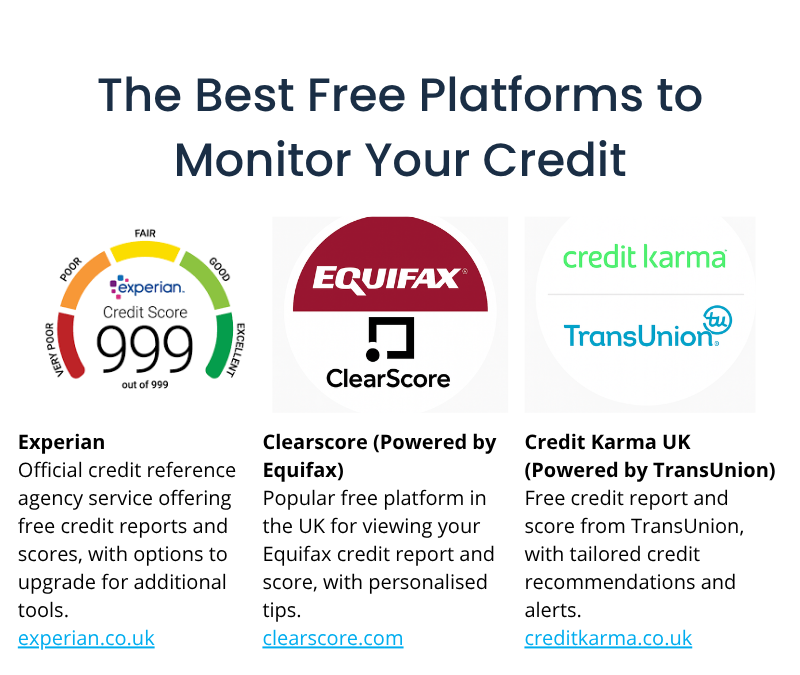
When it comes to your personal credit, three main agencies handle your credit data in the UK:
- Experian
- Equifax (accessed most commonly via the free platform Clearscore )
- TransUnion (accessible for free through Credit Karma UK )
Each agency collects information from lenders, banks, utility companies, and public records to create your credit report and calculate a credit score.
Your credit report shows detailed information about your borrowing history, including on-time payments, outstanding debts, missed payments, and defaults. Your credit score, a number usually between 0 and 1250 (depending on the agency), summarises your creditworthiness.
Lenders use these scores to decide if you qualify for credit and what interest rate to offer. A higher score means you’re viewed as a lower-risk borrower, potentially unlocking better deals on mortgages, loans, and credit cards.
3. Why Is It Important to Check All Three Credit Reference Agencies?
You might wonder, “Can’t I just check my credit score from one place?” The answer: it’s best to monitor all three.
Here’s why:
- Each agency may have slightly different information or data from different lenders.
- Your credit score can vary between agencies due to different scoring models and data sets.
- Checking only one might miss errors or fraud that appear on another.
Understanding your credit score is also a crucial step in managing debt wisely. Explore how to apply these insights with our Debt Management Strategies service.
4. The Best Free Platforms to Monitor Your Credit
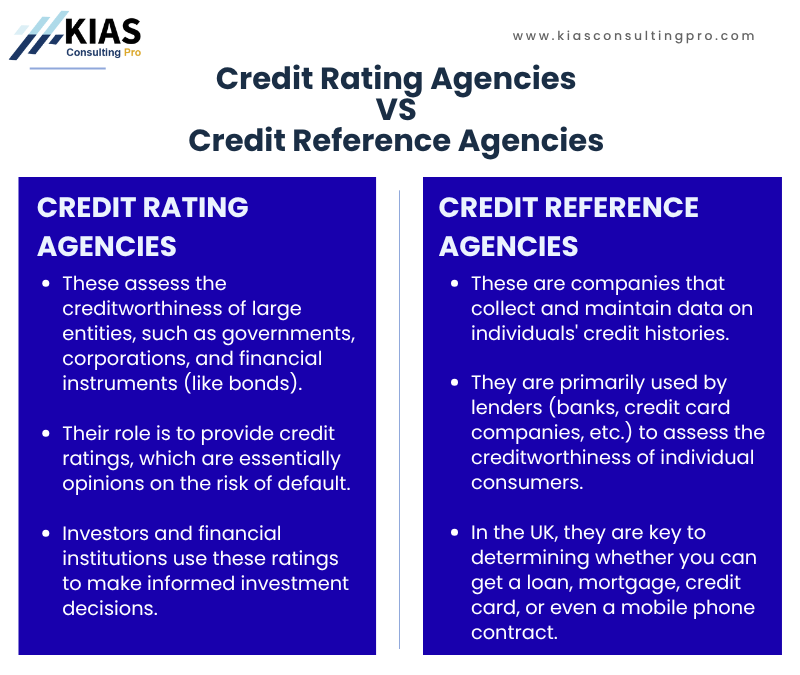
To help you keep track, these three free services provide access to your credit reports and scores for each agency:
- Experian
Official credit reference agency service offering free credit reports and scores, with options to upgrade for additional tools. - ClearScore (Powered by Equifax)
Popular free platform in the UK for viewing your Equifax credit report and score, with personalised tips. - Credit Karma UK (Powered by TransUnion)
Free credit report and score from TransUnion, with tailored credit recommendations and alerts.
Note: You don’t have to pay just to see what’s on your file. Free services and statutory report routes exist; paid plans are optional, not mandatory.
Book a 1:1 session for personalised guidance.
4.1 How to Check Your Credit Score Online Through UK Banks
Many UK banks now offer free credit score checking services directly to their customers, making it easier than ever to keep track of your credit health without needing to visit separate platforms.
Popular UK Banks Offering Free Credit Score Checks:
- Barclays:Through the Barclays app or online banking, customers can view their Experian credit score for free.
- HSBC: HSBC provides free access to your credit score via their online banking and mobile app.
- Lloyds Banking Group:Including Lloyds Bank, Halifax, and Bank of Scotland, offers free credit score checks powered by Experian.
- NatWest: Offers free credit score access through its banking app, powered by Experian.
Checking your credit score through your bank is convenient and secure, as it is integrated into platforms you already trust.
Why Use Your Bank’s Credit Score Service?
- It’s free and easy to access if you are already a customer.
- Often includes simple explanations and tips tailored to your financial profile.
- You get regular updates to monitor your credit score over time.
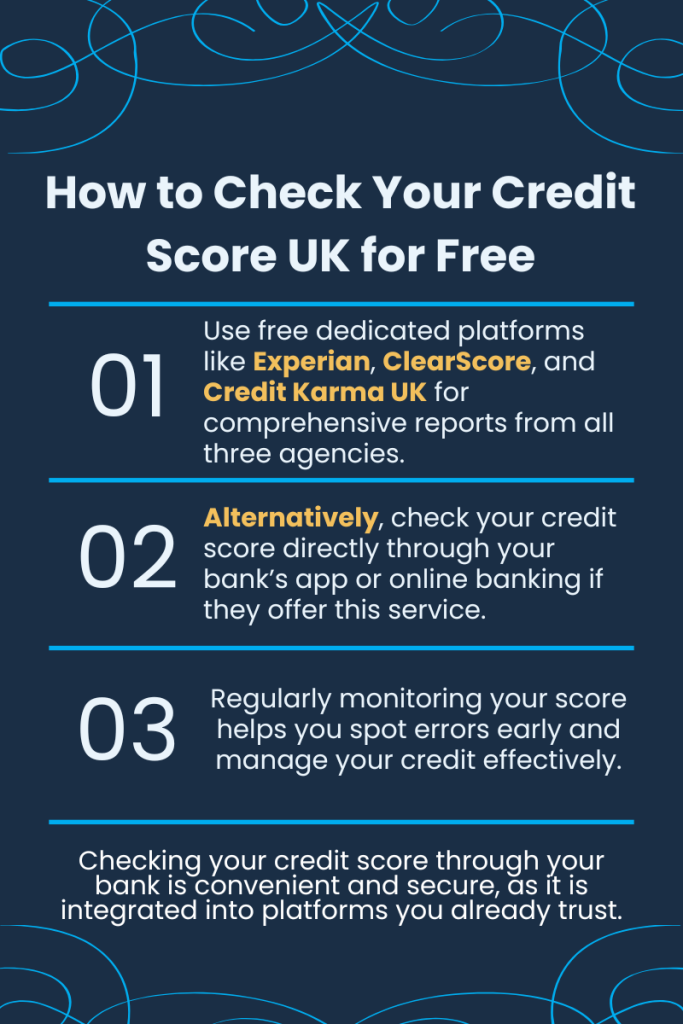
How to Check Your Credit Score UK for Free: Summary
- Use free dedicated platforms like Experian, ClearScore, and Credit Karma UK for comprehensive reports from all three agencies.
- Alternatively, check your credit score directly through your bank’s app or online banking if they offer this service.
- Regularly monitoring your score helps you spot errors early and manage your credit effectively.
5. How Using All Three Platforms Benefits You
By creating accounts on all three:
- You get a complete picture of your credit profile.
- You increase the chances of spotting errors or fraudulent activity early.
- You receive different personalised advice and credit offers that can help you improve your credit score.
- You can track changes and be alerted quickly to any suspicious activity or changes on your reports.
Think of it like having three sets of eyes watching over your credit health instead of one, it’s a simple yet powerful way to stay in control.
If you’re looking to take control of your finances further, learn actionable techniques in our Paying Off Debt or Investing blog series.
6. Practical Tips to Improve Your Credit Score
If you’re looking for a step-by-step, beginner-friendly guide on building your credit score from scratch or repairing it over time, you may also find this helpful:
How to Build Your Credit Score in the UK (Complete Guide)
Alongside monitoring, here are proven ways to boost your creditworthiness:
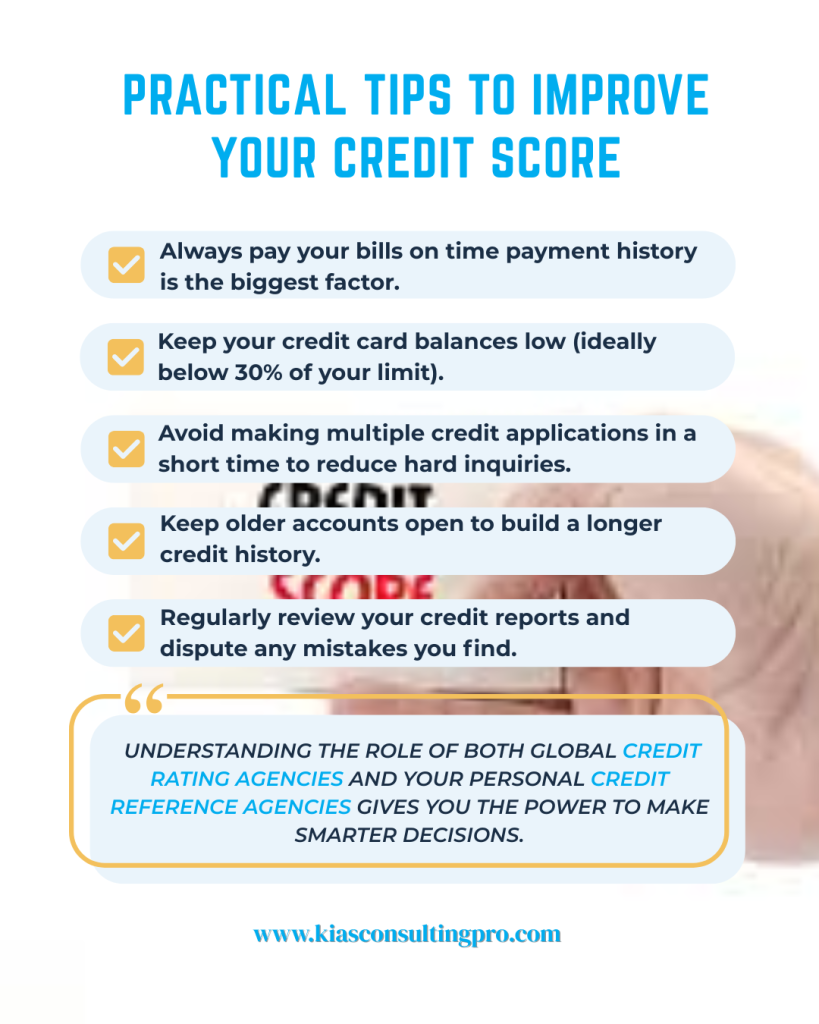
- Always pay your bills on time payment history is the biggest factor.
- Keep your credit card balances low (ideally below 30% of your limit).
- Avoid making multiple credit applications in a short time to reduce hard inquiries.
- Regularly review your credit reports and dispute any mistakes you find.
7. Should You Pay for Equifax’s Full Service?
Equifax offers both a free version of your credit report through platforms like ClearScore, and a paid subscription service that provides more detailed reports, identity theft protection, and additional monitoring features
My Take:
For most people, the free version through ClearScore gives you everything you need to regularly check your credit health. It includes your credit score, report, and personalised tips — all without a monthly fee.
The paid Equifax service might be helpful if you:
- Want extra protection against identity theft or fraud alerts
- Prefer the convenience of continuous monitoring with detailed alerts
- Need access to historical data and more in-depth reports for complex financial situations
However, I recommend only paying for this service when you have a clear reason to do so. For example, if you suspect fraud or identity theft, or if you’re making a major financial move (like applying for a large mortgage) and want to ensure everything is in perfect order.
For day-to-day credit management, the free tools from Experian, ClearScore, and Credit Karma UK are usually sufficient and provide a balanced, comprehensive view across all three credit reference agencies.
Conclusion: Take Control of Your Credit Today
Credit impacts almost every financial step you take, from buying your first home to getting the best deal on a car loan. Understanding the role of both global credit rating agencies and your personal credit reference agencies gives you the power to make smarter decisions.
Start by signing up for Experian, ClearScore, and Credit Karma UK. Monitoring your credit with all three is one of the easiest and most effective ways to protect and improve your financial future.
Watch the full video explainer here: How Do Credit Reference Agencies Work? | UK Personal Credit Explained
Have you checked your credit reports recently? Which platform do you prefer? Let me know in the comments below! And don’t forget to subscribe to our YouTube channel for more practical UK finance tips.


Thank you so much. I found the article very helpful.
Hello Faith, I am glad you found it really helpful. Have a wonderful day!