
Table of Contents
ToggleA Lifetime ISA (LISA) can be your financial ally, providing an attractive 25% government bonus as you save for your first home or retirement. However, the withdrawal rules of a LISA can be pretty complex, and misunderstanding the LISA withdrawal rules and penalties might lead to penalties that can set you back financially. Let’s explore when and how you can withdraw your LISA funds without any surprises.
This blog is part of our comprehensive Lifetime ISA series, designed to provide detailed guidance on using your Lifetime ISA effectively.
Why Understanding Lifetime ISA Withdrawal Rules is Crucial
Meet Alex, a 28-year-old professional from Leeds. Excited about buying his first home, he confidently withdrew money from his LISA only 10 months after opening the account. Unfortunately, Alex didn’t realise the significance of the 12-month minimum holding period before penalty-free withdrawals for home purchases. This oversight cost him 25% of his savings, wiping out his government bonus and part of his own money.
To avoid Alex’s predicament, it’s not just essential, but crucial to fully understand LISA withdrawal rules and penalties. This level of understanding can prevent potential financial losses and ensure a smooth home-buying process.
When Can You Withdraw From Your LISA Penalty-Free?
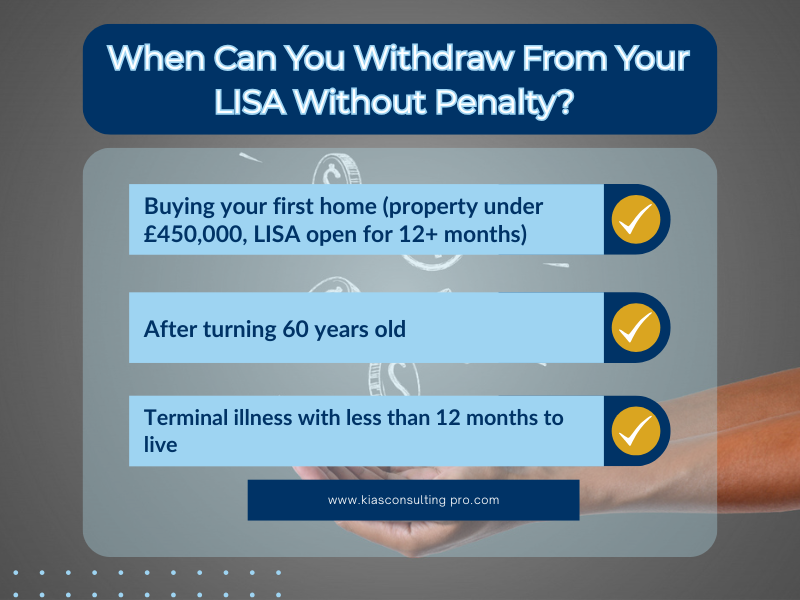
Here are the scenarios allowing penalty-free withdrawals from your LISA:
Buying your first home: The property must be priced at £450,000 or less, and your LISA must have been open for at least 12 months.
After age 60: Withdraw your funds freely, regardless of purpose, without penalty.
Terminal illness: If you are diagnosed with a terminal illness and given less than 12 months to live, you can access your savings from your LISA without penalties. This process is designed to provide you with financial support during a challenging time.

How the 25% Early Withdrawal Penalty Affects Your LISA Savings
The 25% withdrawal penalty doesn’t just remove your bonus—it also takes a portion of your contributions.
Consider this example:
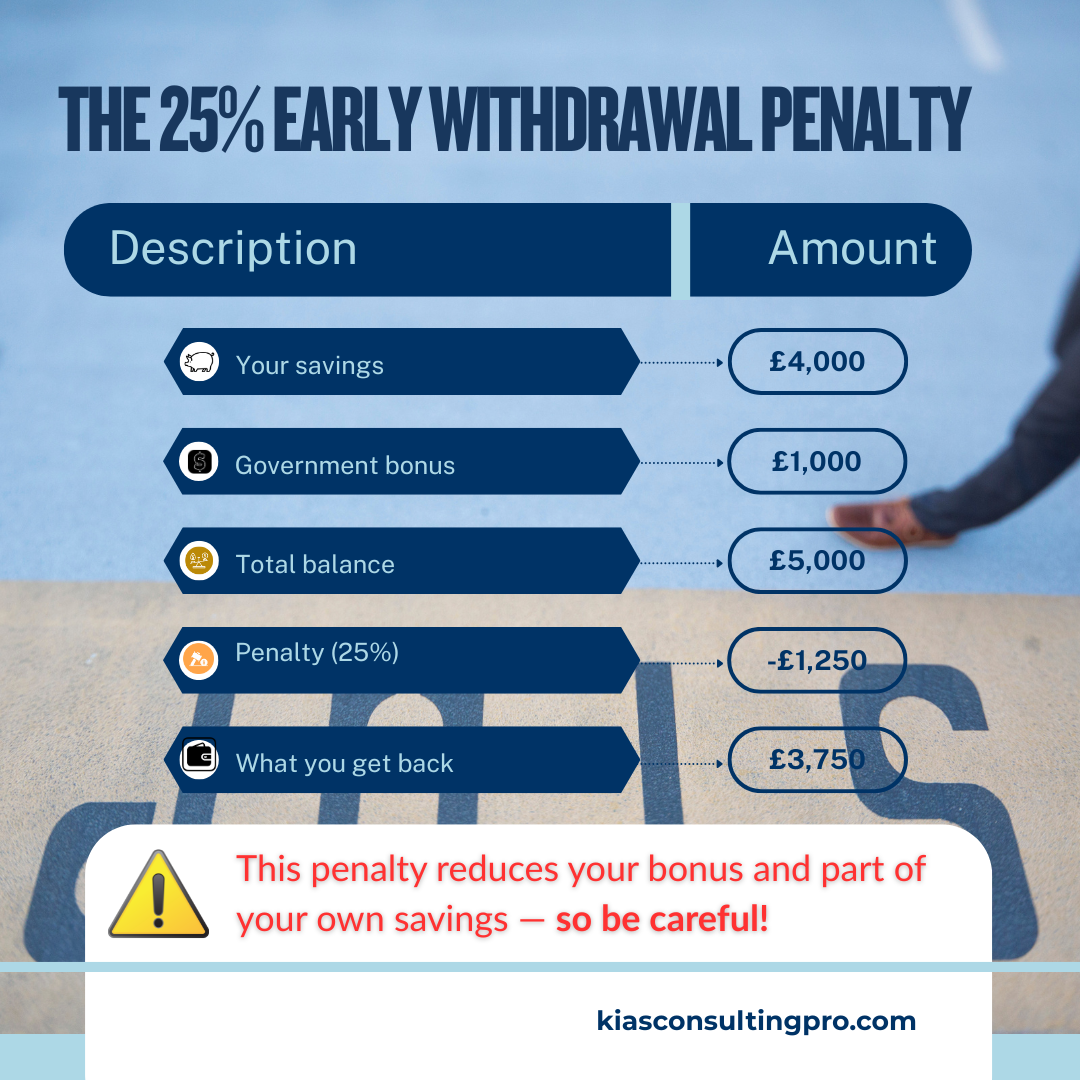
You save £4,000 into your LISA.
The government adds a 25% bonus (£1,000), bringing your total to £5,000.
If you withdraw early for an unapproved reason, a 25% penalty (£1,250) is applied.
You end up receiving just £3,750, losing your entire bonus plus £250 of your initial savings.
This penalty structure is precisely why it’s critical to know the rules.

Joint Purchase Withdrawals: Don't Get Caught Out
If you’re buying your first home jointly, both partners must individually meet LISA eligibility criteria. If your partner is not a first-time buyer or doesn’t have a LISA, you could face penalties. Always confirm your status clearly and speak to your solicitor or conveyancer early in the process.
Common Mistakes to Avoid With LISA Withdrawals
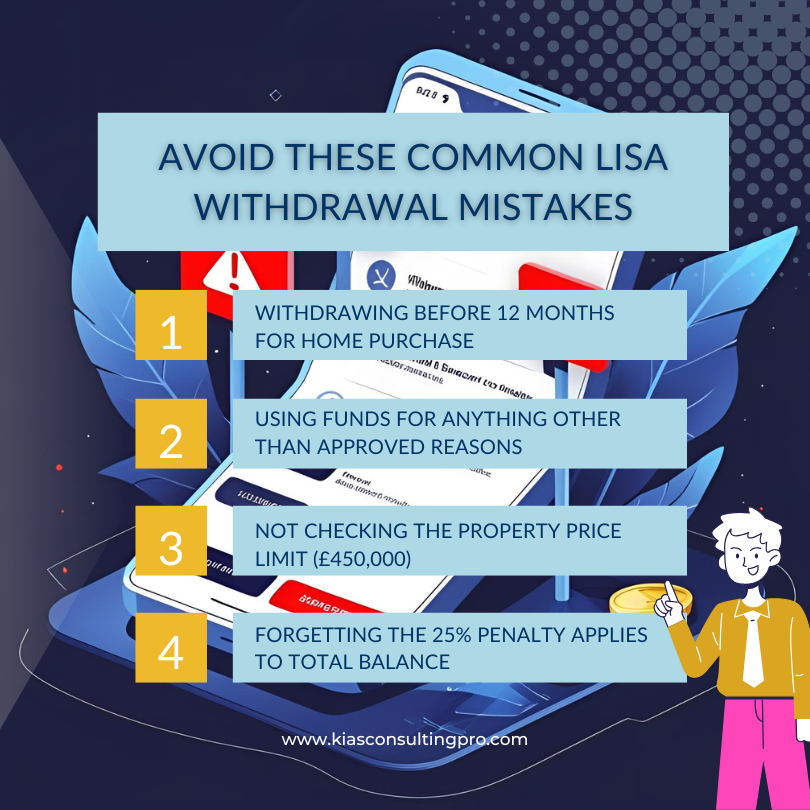
To steer clear of the common pitfalls, keep these points in mind:
Respect the 12-month rule: Plan your home purchase carefully, ensuring your LISA is open for at least 12 months.
Don’t use LISA funds casually: Only withdraw for approved reasons.
Get professional advice: Consult your conveyancer and your LISA provider ahead of any major financial moves.

Helpful Resources
To delve deeper, visit these reliable resources:
Also, don’t miss our other guides in the Lifetime ISA series:
Summary & Key Takeaways
Lifetime ISAs offer great benefits but have strict withdrawal rules.
Early withdrawals face a harsh 25% penalty impacting your savings.
Always ensure you meet all conditions, especially the 12-month rule.

Lifetime ISA Contribution Limits and Bonus Explained (2026 Guide)
Understanding Lifetime ISA contribution limits is crucial for maximising your savings in 2026. The annual limit of £4,000 determines how much government bonus you’ll receive—making it one of the most important aspects of your LISA strategy.
In this comprehensive guide, we explain everything you need to know about LISA contribution limits, including how the £4,000 annual cap works, how it fits within your overall £20,000 ISA allowance, and what happens if you contribute too much.
We’ll also explore practical strategies like monthly versus lump sum contributions, when to contribute for maximum growth, and how to coordinate your LISA with other ISAs. Plus, learn about the 2026 Budget update confirming limits remain frozen until 2031.
Whether you’re saving for your first home or planning for retirement, this guide will help you make the most of your Lifetime ISA contribution allowance and maximise your government bonus.

Will the Lifetime ISA Be Scrapped? Everything We Know About the 2028 Changes
Is the Lifetime ISA being scrapped? Learn what the proposed 2028 changes mean, what stays the same, and how to protect your bonus, retirement options, and home-buying plans.

Hargreaves Lansdown Fee Changes March 2026: What You Really Need to Know
A 515-character summary explaining the key changes (0.45% → 0.35% platform fees, new £1.95 fund charge) and positioning the article as a guide to help readers calculate their impact and decide whether to stay or switch.

Capital Gains Tax on Property in the UK (2025/26)
Capital gains tax on property in the UK can apply when selling a buy-to-let, second home, or inherited property. This 2025/26 guide explains the rules, Private Residence Relief, allowable costs, and the 60-day reporting deadline.

How to Reduce Capital Gains Tax Legally in the UK (2025/26): 10 Strategies That Can Help
Learn how to reduce Capital Gains Tax legally in the UK for 2025/26. 10 practical CGT strategies, clear examples, and a free CGT calculator.

Capital Gains Tax UK: How Much Will You Pay When You Sell an Asset?
Capital Gains Tax can apply when you sell property, shares, or crypto in the UK. This guide explains how CGT works and helps you estimate what you might owe before you sell.

📩 Subscribe below to get the next part of this insightful series delivered straight to your inbox!