

Introduction
Table of Contents
Toggle 📈 Investing Notice: This content is for informational purposes only and not investment advice. Investments can go up and down in value. Always do your own research and seek advice from a regulated professional. See full disclaimer.
What if I told you £100 could turn into thousands, without you lifting a finger? This blog explores the power of compound interest, the quiet force that grows your money steadily, whether through pensions, ISAs, or savings accounts. It’s the silent force that grows your money steadily, whether through pensions, ISAs, or simple savings accounts.
Most people underestimate compound interest because it seems slow at first. But over time, it creates exponential growth. Albert Einstein even called it the “eighth wonder of the world.”Let’s explore what it is, why the first £100,000 matters most, and how you can make it work for your financial future.
What Is Compound Interest?
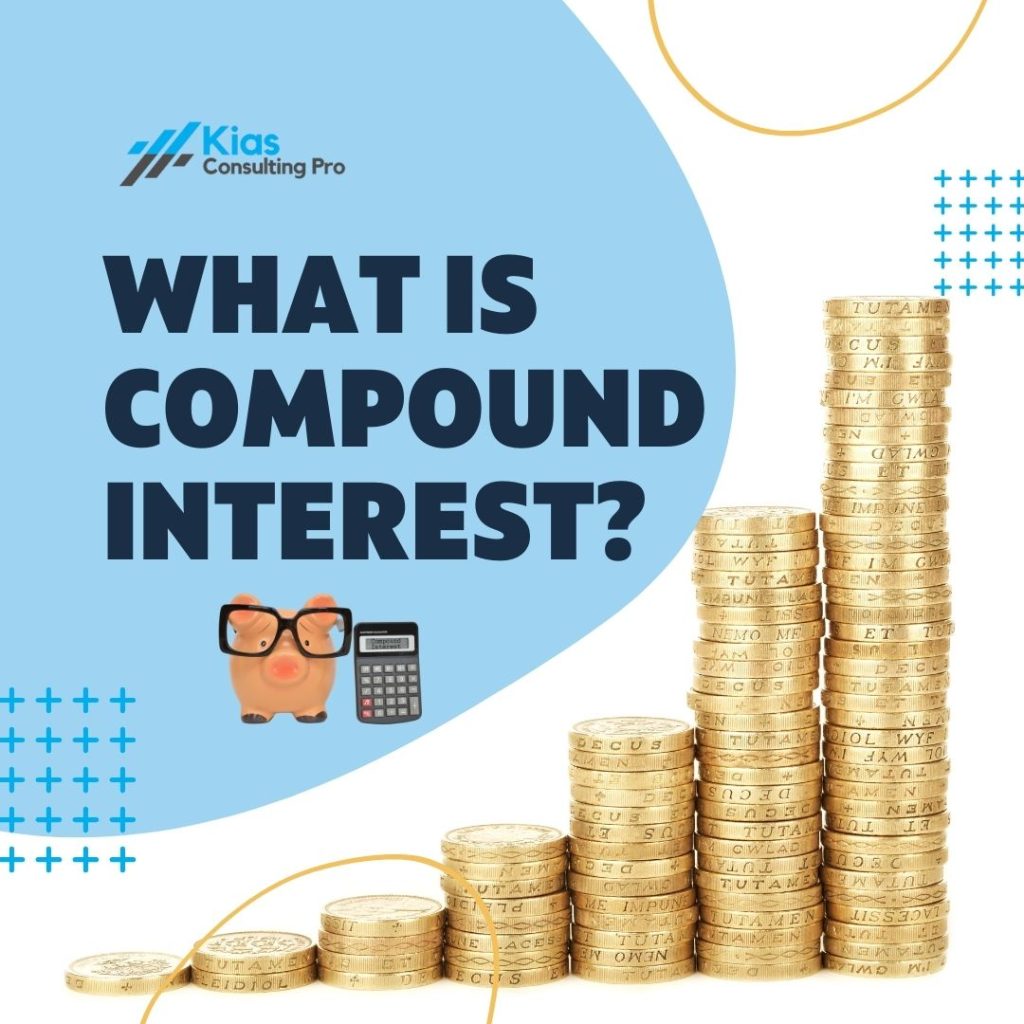
Compound interest means you earn interest not only on your original deposit (the principal) but also on the interest your money has already earned. In short:
- Your money makes money.
- That new money also makes money.
- Over time, the cycle snowballs.

This snowball effect is why compound interest is so powerful; the longer you leave your money, the faster it grows.
Compound vs Simple Interest
To see why compounding matters, let’s compare:
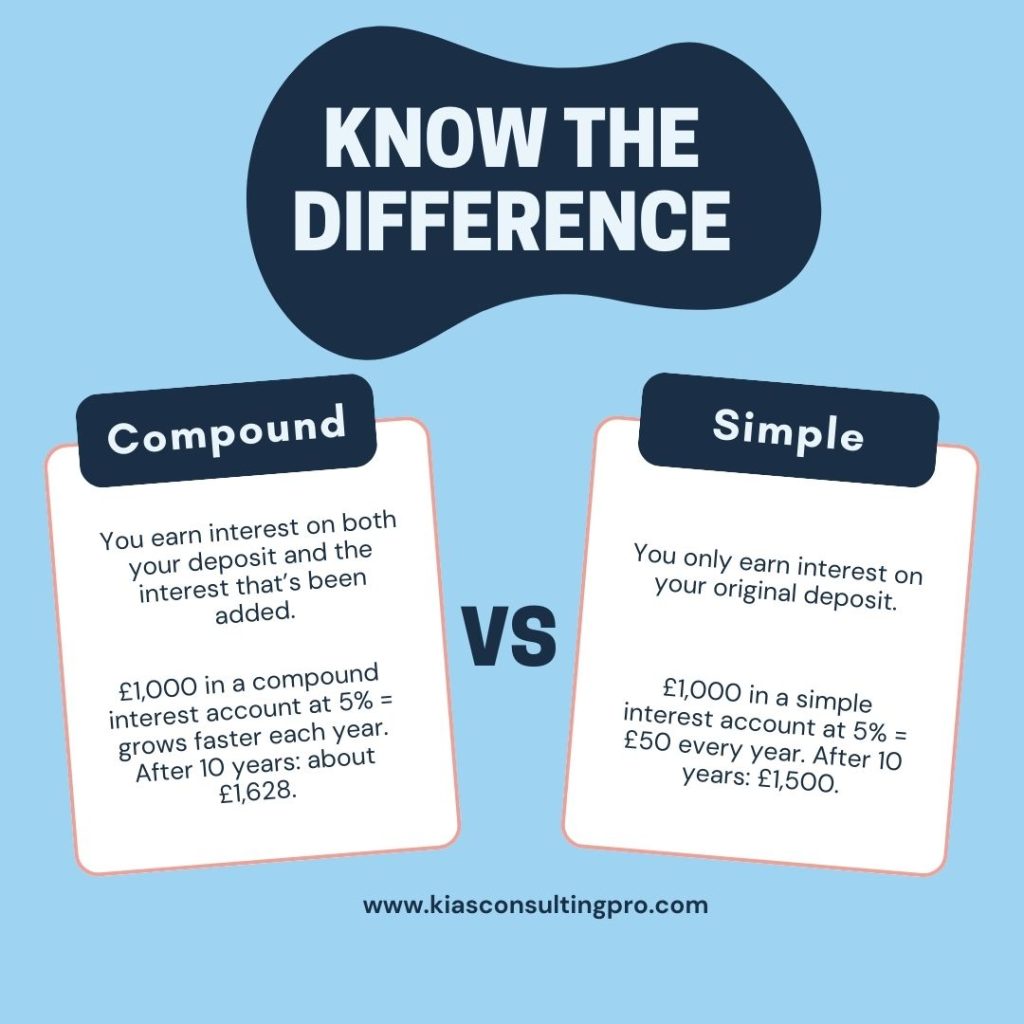
- Simple interest: You only earn interest on your original deposit.
- Compound interest: You earn interest on both your deposit and the interest that’s been added.

Example:
- £1,000 in a simple interest account at 5% = £50 every year. After 10 years: £1,500.
- £1,000 in a compound interest account at 5% = grows faster each year. After 10 years: about £1,628.
That extra £128 may not seem huge, but scale it up across decades and thousands of pounds, and the difference is life-changing.
The Rice on a Chessboard Analogy
One of the best illustrations of compounding comes from an old story about a chessboard.
If you put one grain of rice on the first square, then double it on each square (2 grains on the second, 4 on the third, and so on), by the time you reach the 64th square, the pile of rice would be so huge it could cover a football pitch and stretch miles into the sky.
That’s the essence of compound growth, slow and almost invisible at first, then exponential.

Why the Power of Compound Interest Is So Powerful
Compound interest needs two ingredients: time and consistency.
Let’s say you invest £100 a month at 5% annual growth:
- After 10 years = ~£15,500
- After 20 years = ~£41,000
- After 30 years = ~£83,000
Notice how the last 10 years nearly doubled your money? That’s the snowball in action. The longer you leave it, the more dramatic the growth.
UK Case Study: Start Early vs Start Late
Imagine two savers:
- Sarah (age 25): Invests £200 per month for 10 years, then stops. Total invested = £24,000.
- James (age 40): Starts later and invests £200 per month for 25 years. Total invested = £60,000.
Both retire at 65. At 6% annual growth:
- Sarah’s pot grows to ~£245,000.
- James’s pot grows to ~£190,000.
👉 Sarah invested less but ended with more because she gave compound interest more time to work. Her results highlight the power of compound interest, showing how time can beat larger contributions.
The Tipping Point: When Compounding Overtakes Your Effort
At first, compounding may seem slow because the return is less significant than the initial contribution. But eventually, you hit the tipping point: when your portfolio’s annual growth becomes larger than what you contribute in a year.
Example:
- A UK worker earning £35,000 saves 10% (£3,500 per year).
- Once their portfolio grows past ~£43,750, an 8% return (£3,500) matches their annual contribution.
- From this point onwards, the portfolio is working harder than they are.

This is a powerful psychological shift; your money is officially making more than your effort.
Why the First £100,000 Matters Most
This is a powerful psychological shift; your money is officially making more than your effort.
- An 8% return = £8,000 per year.
- That’s equivalent to 25% of the average UK salary, without you lifting a finger.
It takes discipline and consistency to reach the first £100k, but after that, every next £100k comes faster.
Example (contributing £3,500/year at 8%):
- £0 → £100k = ~15 years
- £100k → £200k = ~6 years
- £200k → £300k = ~4 years
- £400k → £500k = ~2.5 years
👉 The earlier you reach £100k, the faster compounding propels you toward financial independence.
Everyday Examples of Compound Interest in the UK
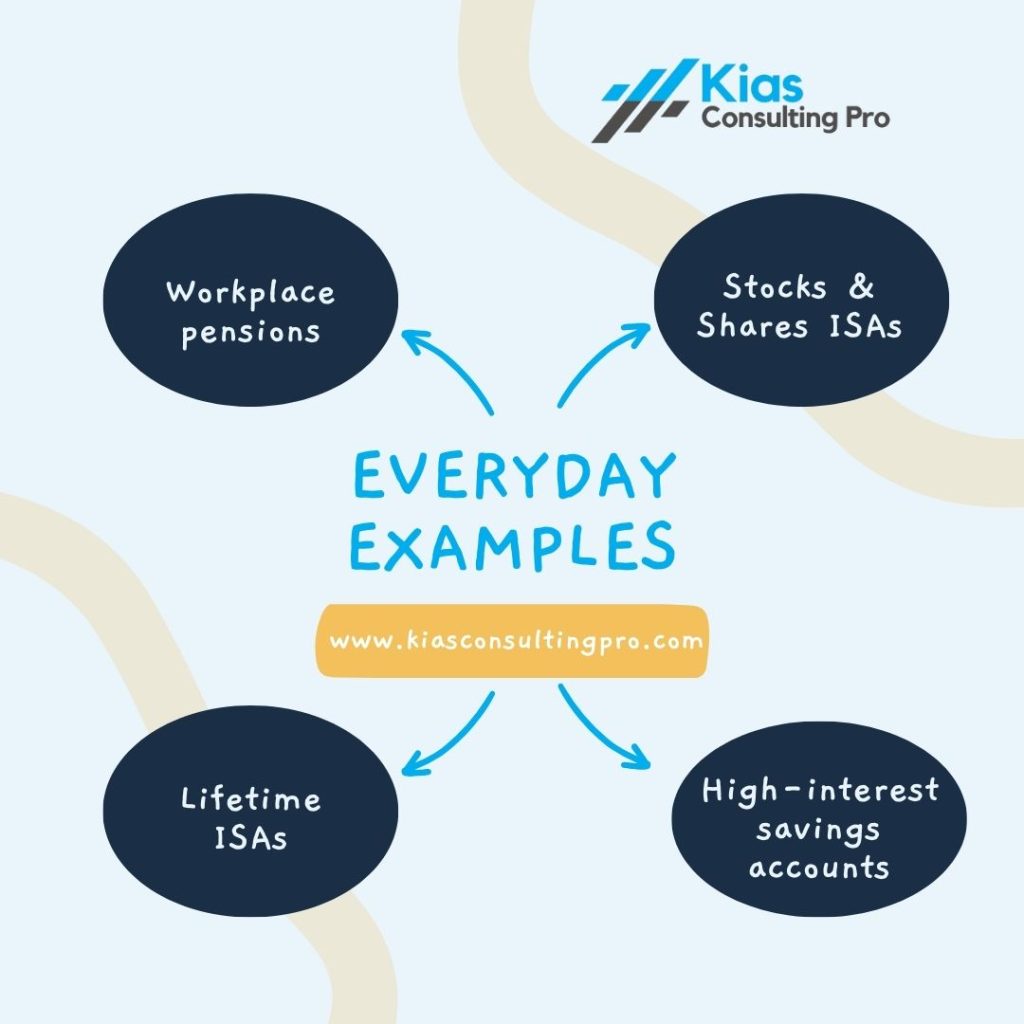
Compound interest isn’t just a theory; it’s built into everyday money products:
- Workplace pensions: Contributions plus employer match grow tax-efficiently for decades. More details about UK workplace pensions .
- Stocks & Shares ISAs: A tax-free wrapper lets compounding work without capital gains or dividend tax. See: Why an ISA Should Be Part of Your Financial Plan
- Lifetime ISAs: Boosted by a 25% government bonus, compounding works even harder.
- High-interest savings accounts: Even 4–5% makes a noticeable difference over the years. See: How to Build an Emergency Fund

FIRE & Coast FIRE: Letting Compounding Carry You
The FIRE movement (Financial Independence, Retire Early) is built on saving and investing aggressively until compounding covers your living costs.
A related idea, Coast FIRE, is especially relevant here.
The idea behind Coast FIRE is simple: once you’ve built a strong foundation, compounding can often carry you the rest of the way.
For some people, this might mean reaching £100k by age 30. But if you’re starting later, don’t worry, the principle still applies. Even hitting that milestone in your 40s or 50s can make a dramatic difference, because compounding still has years to work in your favour.
The key takeaway isn’t a specific age, but that the earlier you start, the less heavy lifting you need to do later, and it’s never too late to begin.
Try It Yourself: Compound Interest Calculator
Understanding compound interest is one thing, but seeing it in action with your own numbers makes it real.
That’s why I’ve included a free interactive calculator below. Use it to test:
- How much your money could grow with regular contributions.
- The difference between saving for 10, 20, or 30 years.
- How Inflation Affects the Real Value of Your Savings.
- What happens if you deposit at the start vs. the end of each month?
This way, you can play around with the numbers and see how even small amounts snowball into something much bigger over time.

💡 Compound Interest Calculator
Ending balance: —
Total contributions: —
Total interest: —
Real (inflation-adjusted) balance: —
📊 Yearly summary
| Year | Start Balance | Contributions | Interest | End Balance |
|---|
Myths & Misconceptions About Compound Interest
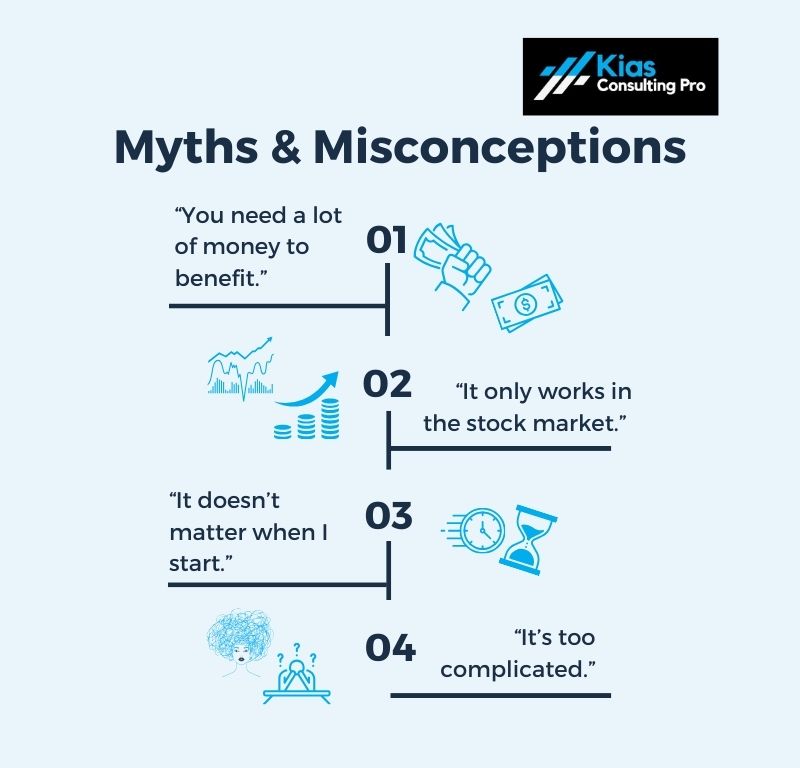
- “You need a lot of money to benefit.”
False. Even small amounts grow over time thanks to consistency. - “It only works in the stock market.”
Not true, savings accounts, bonds, and pensions all use compounding. - “It doesn’t matter when I start.”
Starting earlier beats investing larger amounts later. Time is more valuable than money. - “It’s too complicated.”
Actually, it’s simple: save regularly, reinvest your earnings, and let time do the heavy lifting.

Stay on top of your debts with ease.
Get my FREE Debt Tracker: a simple tool to organise balances, payments, and see exactly when you’ll be debt-free.
How to Harness the Power of Compound Interest
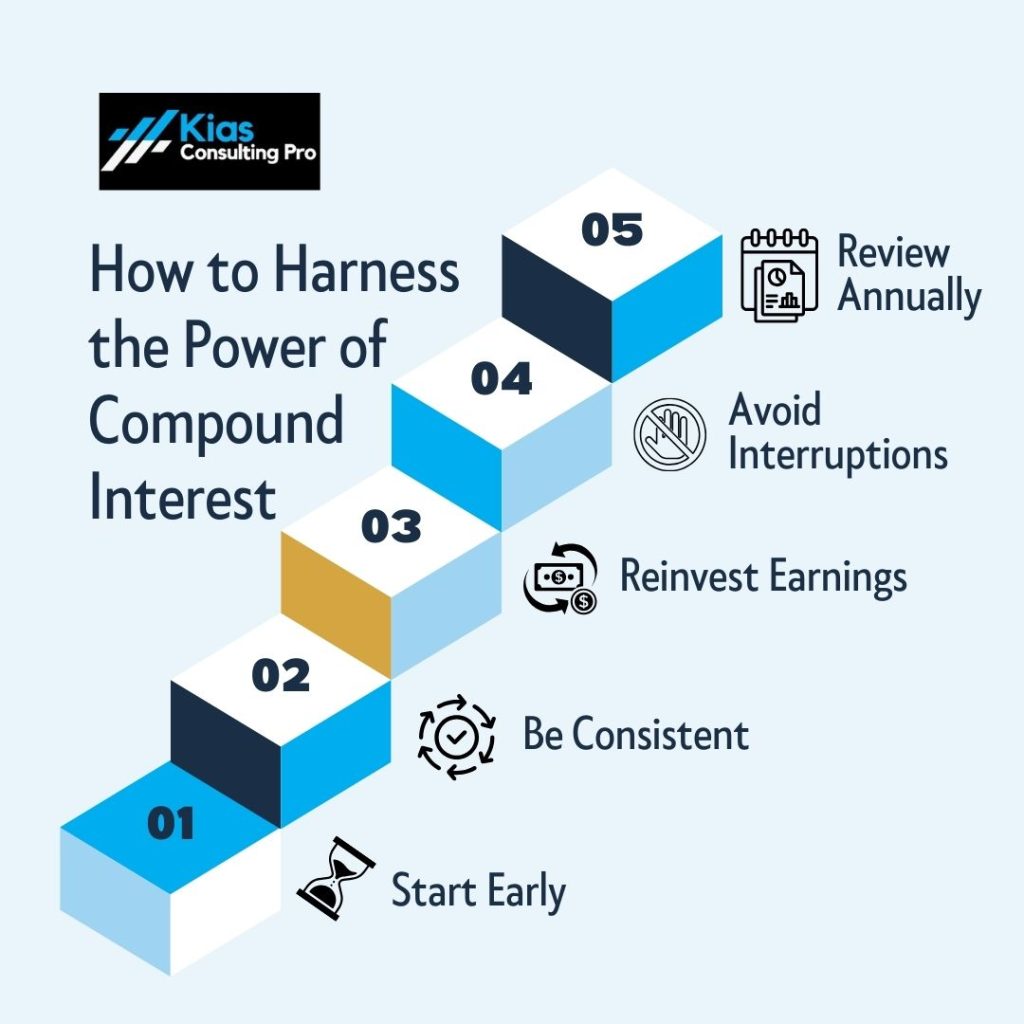
Here’s a simple action plan:
- Start Early: Even if it’s £50/month, begin now.
- Be Consistent: Automate deposits into pensions or ISAs.
- Reinvest Earnings: Don’t withdraw dividends or interest.
- Avoid Interruptions: Stay invested during market dips; compounding works long-term.
- Review Annually: Check fees, contributions, and growth once a year.

The Other Side: Debt Compounds Too
Compound interest doesn’t just build wealth; it can destroy it when applied to debt.
- Credit cards: A £3,000 balance at 20% unpaid for 5 years can balloon to £7,400.
- Payday loans: Extremely high APRs compound rapidly.
- Overdrafts: Rolling balances grow quietly but quickly.
👉 Before focusing on investments, tackle debt first. See: 10 Smart Debt Management Strategies
Quick Reference Table: Compound Interest Growth
Monthly Contribution | Interest Rate | 10 Years | 20 Years | 30 Years |
£100 | 2% | £13,200 | £29,500 | £49,000 |
£100 | 5% | £15,500 | £41,000 | £83,000 |
£100 | 8% | £18,300 | £59,300 | £149,000 |

In conclusion, never underestimate the power of compound interest in shaping your financial future.
It is one of the most powerful tools in personal finance. It rewards consistency and patience, not quick fixes. For instance, in a savings account, compound interest is calculated on both the initial amount of money you deposit and on the interest that money has already earned. This means that over time, your money can grow significantly.
Focus on hitting your first £100,000, because after that, compounding accelerates and begins to change your financial life. Whether through pensions, ISAs, or savings, the earlier you start, the stronger the snowball effect.
Stay on top of your debts with ease.
Get my FREE Debt Tracker: a simple tool to organise balances, payments, and see exactly when you’ll be debt-free.

Lifetime ISA Contribution Limits and Bonus Explained (2026 Guide)
Understanding Lifetime ISA contribution limits is crucial for maximising your savings in 2026. The annual limit of £4,000 determines how much government bonus you’ll receive—making it one of the most important aspects of your LISA strategy.
In this comprehensive guide, we explain everything you need to know about LISA contribution limits, including how the £4,000 annual cap works, how it fits within your overall £20,000 ISA allowance, and what happens if you contribute too much.
We’ll also explore practical strategies like monthly versus lump sum contributions, when to contribute for maximum growth, and how to coordinate your LISA with other ISAs. Plus, learn about the 2026 Budget update confirming limits remain frozen until 2031.
Whether you’re saving for your first home or planning for retirement, this guide will help you make the most of your Lifetime ISA contribution allowance and maximise your government bonus.

Will the Lifetime ISA Be Scrapped? Everything We Know About the 2028 Changes
Is the Lifetime ISA being scrapped? Learn what the proposed 2028 changes mean, what stays the same, and how to protect your bonus, retirement options, and home-buying plans.

Hargreaves Lansdown Fee Changes March 2026: What You Really Need to Know
A 515-character summary explaining the key changes (0.45% → 0.35% platform fees, new £1.95 fund charge) and positioning the article as a guide to help readers calculate their impact and decide whether to stay or switch.

Capital Gains Tax on Property in the UK (2025/26)
Capital gains tax on property in the UK can apply when selling a buy-to-let, second home, or inherited property. This 2025/26 guide explains the rules, Private Residence Relief, allowable costs, and the 60-day reporting deadline.
How to Reduce Capital Gains Tax Legally in the UK (2025/26): 10 Strategies That Can Help
Learn how to reduce Capital Gains Tax legally in the UK for 2025/26. 10 practical CGT strategies, clear examples, and a free CGT calculator.

Capital Gains Tax UK: How Much Will You Pay When You Sell an Asset?
Capital Gains Tax can apply when you sell property, shares, or crypto in the UK. This guide explains how CGT works and helps you estimate what you might owe before you sell.

- Ready to Tackle Debt? Grab This Free ToolRead more
- [FIRST NAME GOES HERE], here is how to build wealth after 40 (yes, it’s possible)Read more
- [FIRST NAME GOES HERE], here is how I’d Save £90 With Almost No EffortRead more
- What happens to your pension when you leave a job?Read more
- Will You Get the Full UK State Pension?Read more
- Are you saving enough for retirement?Read more