



Introduction
Table of Contents
Toggle 💼 Side Hustle Note: This blog shares income ideas for inspiration. Always check local laws and tax requirements before starting a new business. Read full disclaimer.
If you’re wondering how to switch bank accounts in the UK safely, you’re not alone. Many people worry their salary could go missing or bills won’t get paid. Thankfully, the UK’s Current Account Switch Service (CASS) makes the process simple, safe, and guaranteed.
In this guide, you’ll learn:
- How CASS works step by step
- What protections are built in
- Common mistakes to avoid
- Why keeping one “anchor” account is a smart move
💡 Working on debt while you switch? Use my Debt Tracker Toolkit to organise balances, APRs, due dates, and your snowball/avalanche plan so your repayments stay on track.
Stay on top of your debts with ease.
Get my FREE Debt Tracker: a simple tool to organise balances, payments, and see exactly when you’ll be debt-free.
What Is the Current Account Switch Service (CASS)?
CASS is the official system that helps you switch bank accounts in the UK quickly and securely. It is a free, independent switching service operated by Pay.UK.
It moves your payments to a new current account and closes the old one in seven working days under a customer guarantee. Payments sent to your old account are redirected for a minimum of three years (often longer if needed).
More details at Current Account Switch shows more than 11 million successful switches have been completed since launch in 2013.
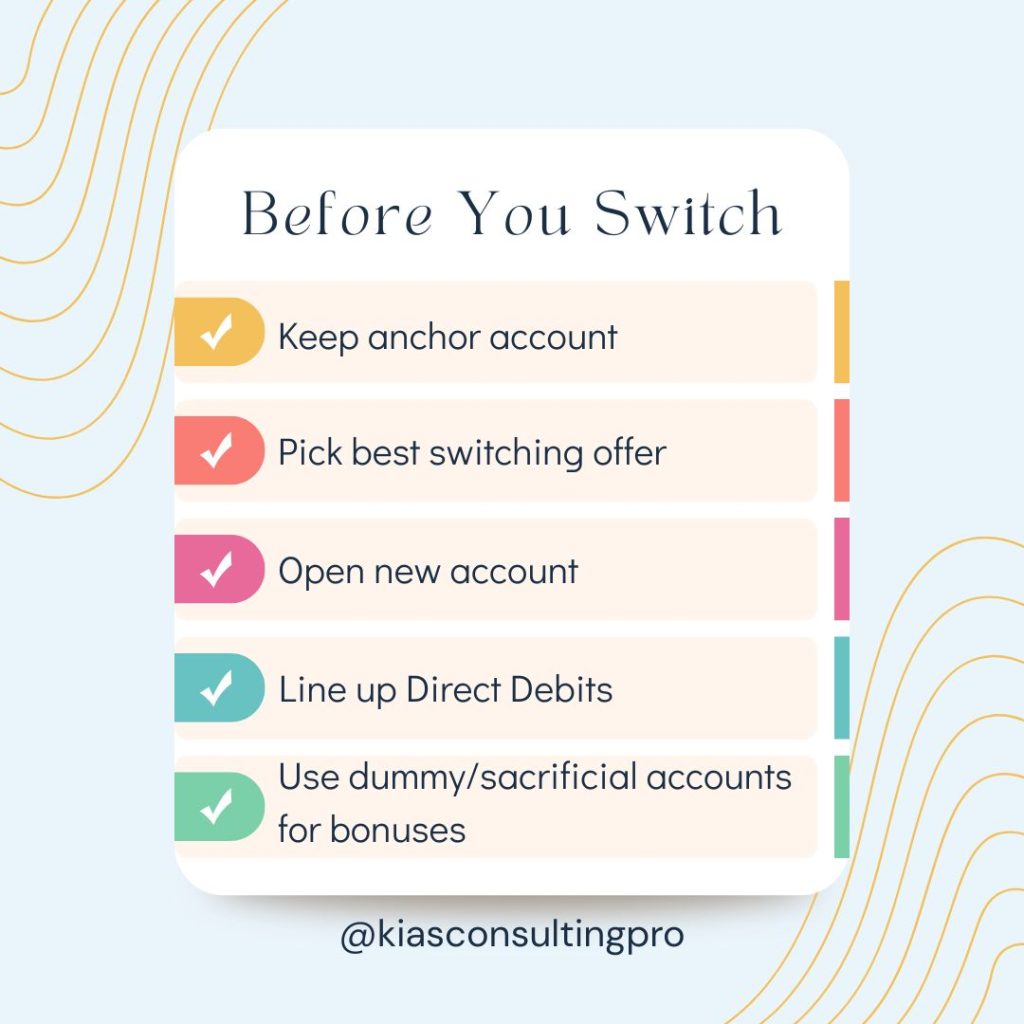
Before You Switch
- Pick an anchor account. Keep one long-standing current account open for continuity (useful for mortgage/lending checks).
- Choose your target offer. Check eligibility rules and any exclusions for existing customers.
- Open the new account. Most applications can be started and finished online or in-app.
- Line up easy Direct Debits. If you need two DDs to qualify, set up small ones first. Start here:

- Consider dummy/sacrificial accounts for future switches (e.g., Monzo, Starling, Chase spaces):
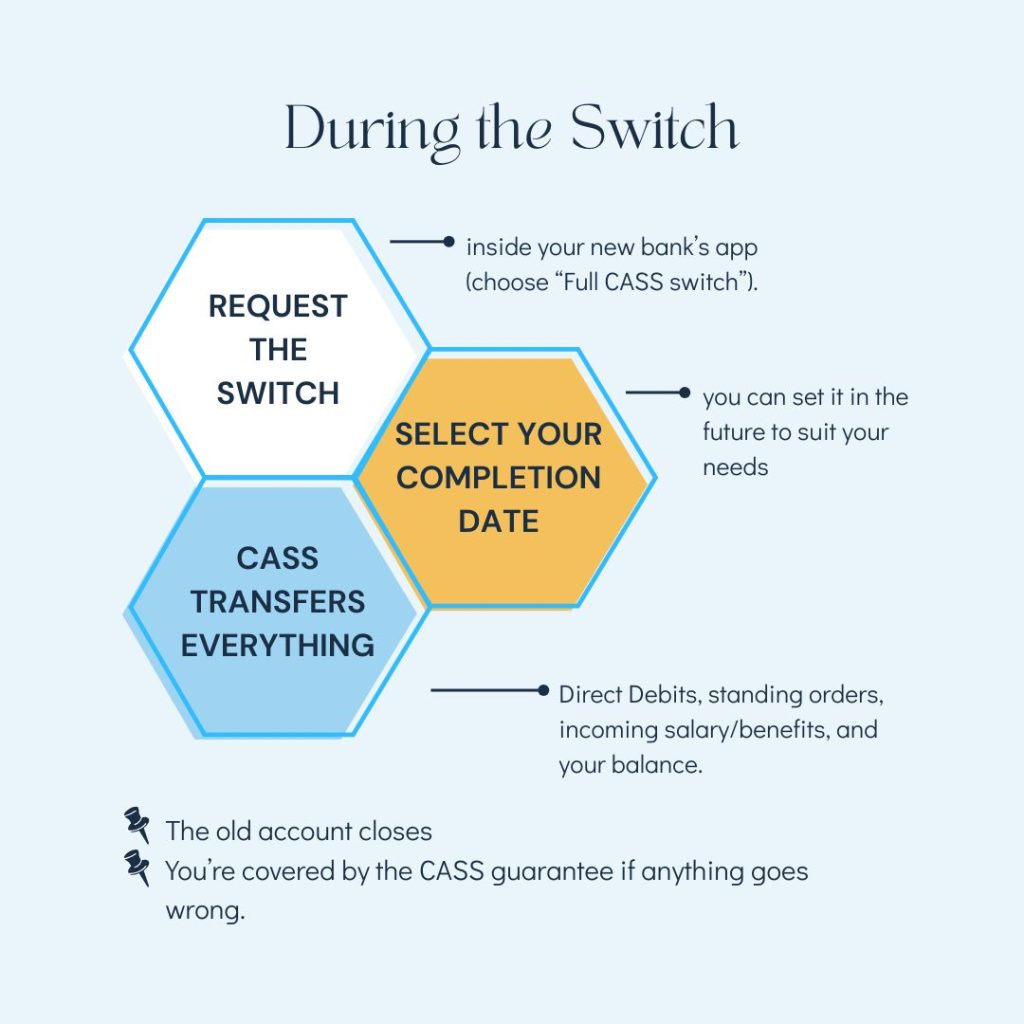
During the Switch (Step-by-Step)
Here’s the step-by-step of how to switch bank accounts UK CASS so nothing gets missed.
- Request the switch inside your new bank’s app (choose “Full CASS switch”).
- Select your completion date (you can set it in the future to suit your needs).
- CASS transfers everything: Direct Debits, standing orders, incoming salary/benefits, and your balance.
- The old account closes automatically on completion day.
You’re covered by the CASS guarantee if anything goes wrong.

After the Switch
- Double-check the first month’s bills and pay-ins. Redirection is in place, but it’s a good idea to take a quick look.
- Meet any bonus conditions (e.g., app login, debit-card spend, minimum pay-in).
- Track your money priorities.If you’re paying off debt, continue using the Debt Tracker Toolkit to manage balances, APRs, and due dates, so switching doesn’t derail your progress.
If you’re comparing multiple bonuses, see my live roundup:

- “My salary might get lost.” Incoming payments are redirected to your new account.
- “I’ll have to contact every company myself.” CASS moves your Direct Debits and standing orders.
- “If something goes wrong, I’m out of pocket.” The CASS guarantee requires the bank to rectify the issue and refund any charges/interest.

- Closing your only main account. Keep one “anchor” account for stability.
- Switching too often with the same bank. Some providers limit repeat bonuses.
- Missing small print. Many offers require a minimum pay-in, specific number of DDs, or a debit-card transaction.
Are the Bonuses Worth It?
Right now, most straight cash incentives cluster around £175–£200, with occasional higher returns when perks or cashback are added. Treat roughly £175–£200 as a sensible guide for typical single-offer switches, then view extras as a bonus rather than a given. MoneyWeek

How long does it take to switch bank accounts?
Seven working days from start to finish under CASS.
How to switch bank accounts online?
Apply for the new account and trigger the switch within the new bank’s app; they handle the rest.
How easy is it to switch bank accounts?
Very, CASS is designed to be simple, with automatic payment transfers and a guarantee.
What a the problems with switching bank accounts, what should I expect?
Issues are rare; if they occur, the guarantee requires your new bank to fix them and refund related charges/interest.
Will my Direct Debits and salary move automatically?
Yes, and payments to your old account are redirected for at least three years (often longer if needed)
Does switching affect my credit score?
The switch itself doesn’t, but closing your oldest account can affect average account age, so keep an anchor account.
Can Plum deposits be withdrawn?
Yes. Plum allows you to withdraw deposited funds back to your bank, making it essentially a cost-free way to create a DD.
What happens if I forget to set up DDs in time?
Most banks give you 30–60 days to activate them. If you miss the window, you could lose the bonus. Always set them up immediately after your switch completes.

By using CASS to switch bank accounts in the UK, you can enjoy cash bonuses and peace of mind which, thankfully, makes switching quick, secure, and backed by a guarantee.
Remember, keep one anchor account, prep your Direct Debits, and read the offer terms; that’s the formula for a smooth, stress-free switch.
If you’re also tackling debt, keep momentum with my Debt Tracker Toolkit (balances, APRs, due dates, and progress all in one place).

Planning for Retirement with Your Lifetime ISA: Complete UK Guide (2026)
Planning for retirement with a Lifetime ISA offers unique advantages that many savers overlook. With tax-free growth, tax-free withdrawals from age 60, and a 25% government bonus, LISAs can be a powerful addition to your retirement strategy—especially for basic-rate taxpayers and the self-employed.
This comprehensive guide explains everything you need to know about using your LISA for retirement, including detailed comparisons with pensions, realistic projections of what you could have by age 60, and strategic advice on combining LISAs with workplace pensions.
Importantly, with the government planning to remove the retirement feature for new savers around April 2028, understanding your options now is crucial. If you’re eligible (ages 18-39) and interested in retirement planning, opening a LISA before the changes could preserve this valuable benefit.
Learn how to make the most of your LISA for a more secure financial future.

Lifetime ISA Contribution Limits and Bonus Explained (2026 Guide)
Understanding Lifetime ISA contribution limits is crucial for maximising your savings in 2026. The annual limit of £4,000 determines how much government bonus you’ll receive—making it one of the most important aspects of your LISA strategy.
In this comprehensive guide, we explain everything you need to know about LISA contribution limits, including how the £4,000 annual cap works, how it fits within your overall £20,000 ISA allowance, and what happens if you contribute too much.
We’ll also explore practical strategies like monthly versus lump sum contributions, when to contribute for maximum growth, and how to coordinate your LISA with other ISAs. Plus, learn about the 2026 Budget update confirming limits remain frozen until 2031.
Whether you’re saving for your first home or planning for retirement, this guide will help you make the most of your Lifetime ISA contribution allowance and maximise your government bonus.
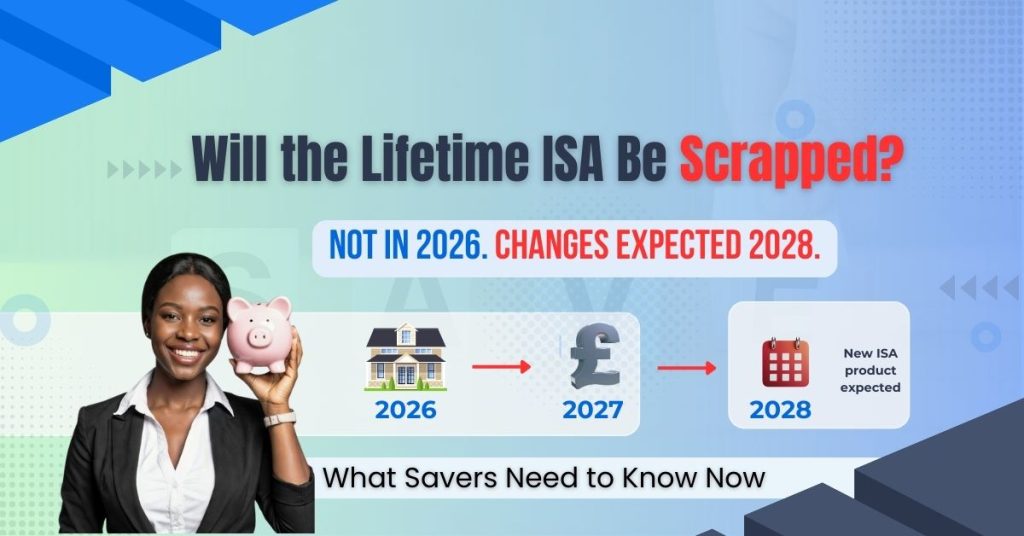
Will the Lifetime ISA Be Scrapped? Everything We Know About the 2028 Changes
Is the Lifetime ISA being scrapped? Learn what the proposed 2028 changes mean, what stays the same, and how to protect your bonus, retirement options, and home-buying plans.

Hargreaves Lansdown Fee Changes March 2026: What You Really Need to Know
A 515-character summary explaining the key changes (0.45% → 0.35% platform fees, new £1.95 fund charge) and positioning the article as a guide to help readers calculate their impact and decide whether to stay or switch.

Capital Gains Tax on Property in the UK (2025/26)
Capital gains tax on property in the UK can apply when selling a buy-to-let, second home, or inherited property. This 2025/26 guide explains the rules, Private Residence Relief, allowable costs, and the 60-day reporting deadline.

How to Reduce Capital Gains Tax Legally in the UK (2025/26): 10 Strategies That Can Help
Learn how to reduce Capital Gains Tax legally in the UK for 2025/26. 10 practical CGT strategies, clear examples, and a free CGT calculator.